Showing posts with label Santa Cruz. Show all posts

Sunday, June 11, 2017

Hunting and Trapping

Initially, grizzlies were not hunted for food, but for their skins, for the thrill, and because of their threat to livestock.

Grizzly Bear Trap
Grizzly Bear Trap
from The Newhouse Trappers Guide, 1914.
Before the introduction of the repeating rifle, killing a grizzly with a shot gun was very difficult. It was rare that a single bullet would suffice, so the best option was to trap and then kill the animal.

Bayard Taylor, 1849: "We had no other arms than pistols and knives and no horses of sufficient fleetness to have ventured an attack with safety; so we passed on with many a wistful and lingering look, for the gray hide of one of those huge beasts would have been a trophy well worth the capture."

Strychnine LabelBesides traps, poisons, such as strychnine and phosphorus, were also used. Often a grizzly would not eat an entire animal in one sitting but come back the next day to finish it off.
The left remains would be poisoned in anticipation of the grizzly’s return. See the blog post: Treed by a Dead Bear.

Santa Cruz Weekly Sentinel,1872: "Some twenty [bears] have been killed in this county recently, in that way. Mr Miller returned to his ranch yesterday with four bottles of strychnine to cure bear meat, he having previously fought three bears from a tree in his oat field, and had only an ax to keep the old she bear and her cubs from climbing the tree."

Mrs. Winslow's Soothing Syrup Label
Santa Cruz Weekly Sentinel, 1872: "Varments of the grizzly tribe are peculiar, and the best medicine we can think of is Mrs. Winlow’s soothing syrup, especially for the cubs, when they set up that hideous howl so graphically described. For the older ones, Galena pills [lead shot] – 16 to the pound – from Dr. Henry’s repeater or the Parker gun with good strong powder would no doubt be potent, but in case of failure, try strychnine."

Mrs. Winslow’s syrup contained morphine and was responsible for the drug addition and death from overdose of countless infants and children.

A Text Book for the Professional Teacher, 1910: "The Food Department of the United States has established a list of medical preparations, “soothing syrups,” which are referred to as “baby-killers.” The use of this class of products is certainly to be condemned, and the list as given by the United States Government chemists includes the following preparations: Mrs. Winslow's Soothing Syrup (morphine sulfate)."   


Monday, May 22, 2017

"Chawed up"

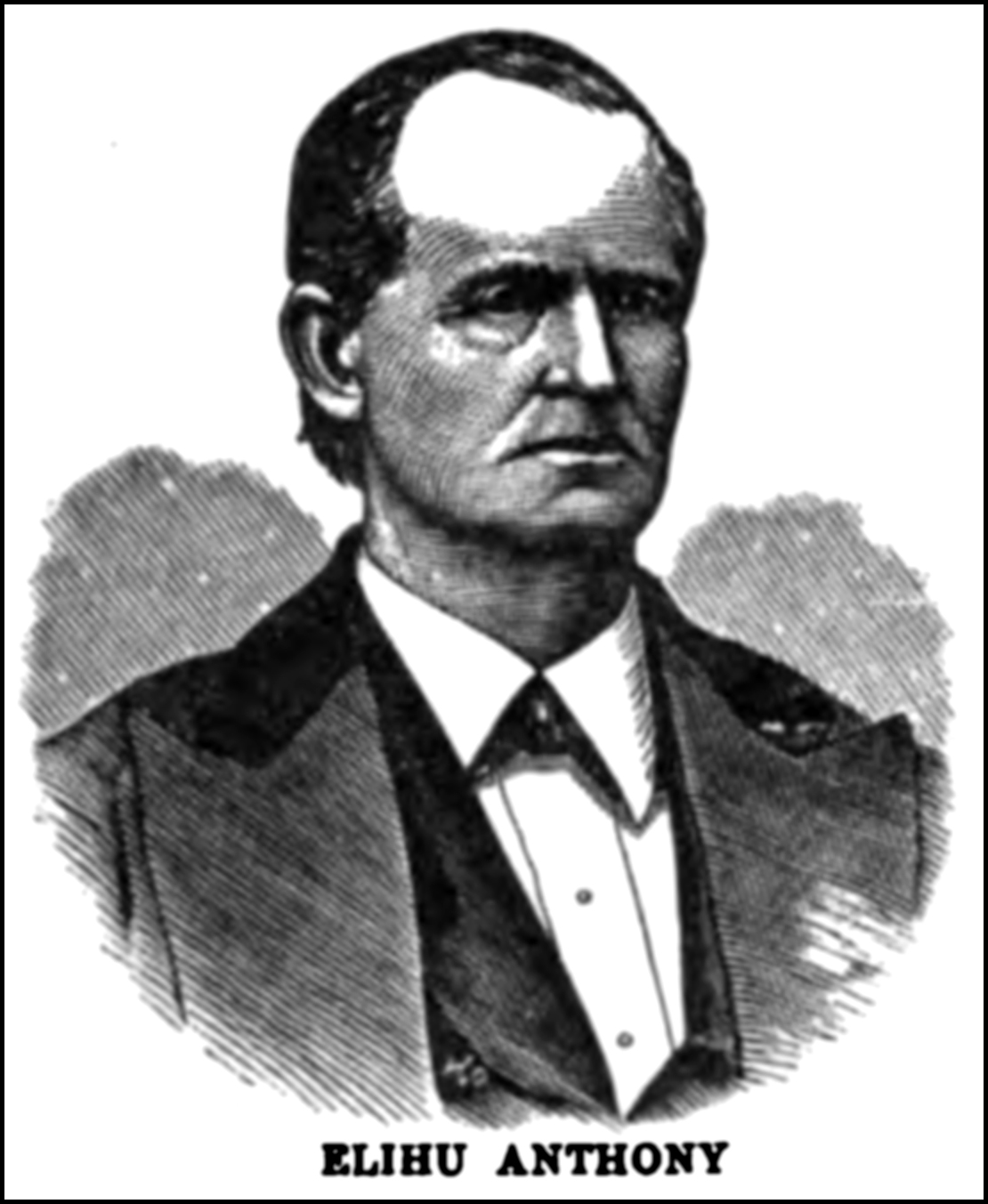
1851: As told by Elihu Anthony in 1885

Elihu Anthony
Elihu Anthony,
Santa Cruz County, California ...,
W. W. Elliott & Co., 1879
The first mail was brought to Santa Cruz on horseback over the mountains from Santa Clara in the winter of [18]'50. The mail consisted of one letter and two newspapers.... We hadn't enough mail to put in a bag until we began to receive a regular mail once a week in [18]'51. When the news was heard of a steamer arriving in San Francisco with the Eastern mail the whole white population waited anxiously for the mail, which brought them news from home and friends.


Loma Prieta by William Keith
Loma Prieta by William Keith, 1874
Lard & Davis had the first contract to carry the mail. This was in '51. Lard's boy, who carried the mail on a mule, once, while coming over the mountains, ran down a cub or young bear. He tried to make the cub come out, but couldn't make it do so. The mail bag was lashed to the saddle, you see, and when the young Lard whipped up the mule, the old bear, who was watching the proceedings, came after him. The boy heard the bear coming, and gave one glance around and then put the spurs to the mule. The bear gained on him and when near enough sprang on the mule's back, scraping the flesh off and taking the mail bag. I tell you when the boy reached town he was as pale as a ghost and frightened almost out of his wits. Well, to cut the story short, we sent a man back to find what mail the bear was kind enough to leave. The strangest thing of all, was that the man returned with the mail, but he reported that the bear had "chawed up" the leather bag and did not damage the mail.

Wednesday, January 11, 2017

Ohlone and Grizzlies

Prior to 1769, the Ohlone were the only peoples to inhabit the Santa Cruz area. Their total population once numbered 10,000 or more with a least 600 villages in and around Santa Cruz. Village populations ranged from 50 to 500. In the smaller seasonal villages, the villagers would take advantage of seasonal sources of food, such as game, fruits, and nuts.

Many foods were favorites of both the Ohlone and grizzlies. Acorns, one of a grizzly's favorite foods, was a staple food for the Ohlone. It likely resulted in confrontations during the acorn harvest season or a grizzly raid on a village acorn storage site. Other foods they both ate included seeds, berries, roots, deer, fish, and whale. 

In 1776, while in what is now San Mateo County, the second Anza Expedition encountered, and killed, a large grizzly. Father Font wrote in his diary:

"There are many of these beasts in that country, and they often attack and do damage to the Indians when they go to hunt, of which I saw many horrible examples."

In the book Three Years in California [1846-1849], Walter Colton describes the grizzly:

"Nature has thrown over him [the grizzly] a coat of mail, soft indeed, but impervious to the storm and arrow of the Indian."

Archaeologist Mark Hylkema:

"…grizzly bear remains [are found] in the archaeological sites, and it is interesting to recognize that these large semi-aggressive omnivores co-existed with native people for millennia. The skins were used by high status men and various membership societies used them as totems."

"…[grizzly remains are] not infrequently seen as ornament and display among human burials. They occur as canine teeth pendants with drilled apertures for stringing, and claw necklaces." 

In 1776, while on the San Francisco Peninsula, Father Font described bear skin clothing in his diary:

"Among the men I saw a few with a little cape like a doublet reaching to the waist and made of bear skin, and by this mark of distinction I learned that these were the owners or masters of the launches."


Grizzly Bear Claw
Collection of the Los Altos History Museum
This California grizzly bear claw was found in a Los Gatos cave by Albert Thirkell. It is not known what date it was found.

It was given to Los Altos Hills amateur historian Florence Fava around 1970. She wrote:

“This is but one of several which made up a necklace which crumbled when removed from the cave it was found in.”


Sunday, January 8, 2017

A Bear or a Bull?

1902: In 1902, the Santa Cruz Sentinel newspaper re-published a rather confusing story from the San Jose Mercury. A San Jose butcher, Charles Thomspon, hung a side of meat in his shop and to it attached a sign saying “Bear.” To Charles Wampach he admitted that the bear had been caught in the Big Basin by Andrew P. Hill.

Soon half a dozen butchers from around town gathered at the shop to admire the “fine specimen.” Then Thompson retracted his story, saying no it is not a bear but a calf. The butchers didn’t buy the story - they knew the difference between bear and beef! So Wampach sought out Hill for clarification.

Hill confirmed the story, and stated that the bear had "come at me" while he was photographing in the Big Basin and that he and John Richards, who was accompanying him, killed the bear together.

The story implies that Thompson, the butcher, was deliberately staging a joke and that Hill somehow guessed this and followed along with the pretense.

Perhaps it would not have been prudent to be advertising the fact that there were bears in the Big Basin at the same time as one was advocating it as a State Park. Big Basin became a State Park in 1902, second only to Yosemite which had by then become a National Park. Hill was the highly influential, official artist of the Sempervirens Club, the club that was so actively working to petition for the establishment of the park.

Later, Hill ran a photography and art studio in Big Basin Redwoods State Park. When his health was failing in 1922, he advertised for someone to assist him. Forest Roy Fulmer applied for the position.

He worked closely with Hill over the next few months until Hill’s death. Fulmer took over the studio. One of the multitudes of postcards published by Fulmer’s Studio depicts a photograph taken by Hill of the Grandmother Tree. On the back it states, “This tree is hollow at the base. A bear was killed in this tree about 1900.”


Saturday, January 7, 2017

Rancho Punta del Año Nuevo

Isaac Chapman Steel,
The History of San Mateo County, California,
1883, B. F. Alley Publisher
1867: Once Rancho Punta del Año Nuevo, of which a part became the Isaac Steele Dairy Ranch, abounded with grizzlies. The Ranch, now part of Año Nuevo State Park, is located 21 miles north of Santa Cruz and is adjacent to Big Basin Redwoods State Park. An 1867 encounter with a grizzly above the garden at Isaac Steel’s home, Green Oaks, was chronicled in À La California by Col. Albert S. Evans, 1873: 

"Mr. Steele pointed out where a fearful scene was enacted just above his garden in 1867. An old she-bear came down with her two cubs in the day-time and seized a hog. Two men employed on the ranch, both Portuguese, started to rescue the hog. One had a gun, the other only a garden mattock. They found her by the fence eating the hog, and yelled at her to drive her away. She accepted the challenge, and with a growl dashed over the fence and after them. The man with the gun pointed it full-cocked at her head, but, as he afterward admitted, when he felt her hot breath in his face, became demoralized, dropped the weapon and jumped over the fence. His companion
Included in the National Register Nomination Form, 1976
Courtesy San Mateo County Historical Association
followed his example, and they jumped back and forth for some minutes with the enraged brute in close pursuit. At length the man who had the mattock started to run across the field toward the house; but the bear caught him, threw him down, bit him through the thigh, and then started after the other assailant. Had the wounded man feigned death he would have been saved; but not understanding grizzly fighting, he jumped up and began shouting for help. At this she turned upon him more infuriated than ever, and, seizing him by the side, literally tore him in pieces, killing him instantly. The other man escaped. The next morning the bear, bear-like, returned to finish the hog, and was shot by a party lying in wait for her."

Thursday, January 5, 2017

Grizzly in Big Basin - Too Frightened to Stay

1890: In May 1890, Jacob “Hans” Mandel, a cook at a sawmill near Boulder Creek, and two friends had an encounter with a bear while on a hunting trip in the Big Basin. As the men rested in the evening after the day's work they heard a noise in the brush. On looking around they spotted a huge grizzly bear in the distance. The grizzly saw them and moved towards them "his eyes gleaming like two electric lights."

The men ran for a mile with the grizzly gaining on their heels. They reached a tall climbable tree and took refuge in it just as the grizzly caught up. Unable to reach the men, the grizzly just remained at its base for several hours. Afraid to move, the men stayed in the tree all night on their "uncomfortable perches." In the morning they realized the bear had departed, so they climbed down the tree and "made haste to reach Boulder."


The experience was too much for Hans who promptly resigned as cook to return to the safety of Santa Cruz. This was a great loss to the sawmill crew as Hans was famed for his corn beef hash which was considered "a rare delicacy." And the different ways in which he served mush and milk for breakfast had given him a reputation which made him the "envy of the other chefs in the neighborhood."

Billy Bruin Jr.

1891: In the spring of 1891, a two month old grizzly cub was captured on Mountain Charley's ranch in the Santa Cruz Mountains. Billy Bruin, Jr. was taken to the ranch of a Dr. Charles C. O'Donnell at Glen Ellen in Sonoma County. The ranch was an extensive mineral resort along Sonoma Creek.

Six months later Billy returned to Santa Cruz. He had been loaned by Dr. O'Donnell to the Native Sons California Parlor No. 1 to participate in the Admission Day parade through Santa Cruz.

Admission Day Arch 1891
Admission Day Arch, Pacific Avenue, Santa Cruz
San Francisco Chronicle, September 10, 1891
Santa Cruz, Cal, Admission Day 1888
While in Santa Cruz, Billy visited the offices of the Santa Cruz Surf newspaper and was described as “the most affectionate little fellow in the world and can give a bear’s grin and a bear’s hug in the most approved style, and without the least malice.”

Wednesday, January 4, 2017

Lion-hearted and Brave Old Dog Saves the Day

1865: On April 16, Ethelbert Harris who lived about twenty miles north of Santa Cruz on the El Jarro Rancho, near Davenport, encountered a grizzly about a mile and a half from his house. His dogs had been “worrying” her, and so she was quite aroused. He raised his rifle to fire at her but it misfired. He tried to strike her with it but tripped and fell. The grizzly pounced on him, lacerating his right leg.

His dog, Towser, “the truest and most faithful friend man ever had” came to his rescue by trying to engage to bear giving Harris the chance to climb a nearby tree. He called off Towser and the other dogs and after about fifteen minutes the bear had departed and, faint from the loss of blood, he climbed down the tree.


Santa Cruz Sentinel,
September 30, 1992
The whole incident was witnessed by his adult son Sandero and by William Cook who were both in the safety of neighboring trees. The two men helped him back to the house and it was hoped that the wound would heal. Unfortunately, it did not and had to be amputated. The leg was buried in a nearby cemetery and a picket fence erected around it.

The Harris family eventually moved to Monterey and the land on which the leg was buried became part of McCrary’s Big Creek Lumber’s holdings.

According to historian Sandy Lydon, it wasn’t until years later, when Donald Clark was researching place names for his books Santa Cruz County Place Names and Monterey County Place Names that he discovered that the rest of Harris was buried in Pleyto Cemetery in South Monterey County.

In July 1992, with the help of the McCrary family, a Harris family reunion was organized at the site of the burial of the leg. “Among the family mementos brought for display were the barrel of the rifle that had misfired on that fateful day and one of the peg legs Harris wore as a result of it.”