Showing posts with label Santa Cruz Mountains. Show all posts

Tuesday, July 25, 2017

The Soquel Bear

October 23, 1978, Santa Cruz Sentinel,
Courtesy Newspapers.com
1978: Valerie Norkoli remembers a bear in the late 1970s:
"It was in the Soquel Hills less then a 1/4 mile from my house. It mauled our neighbors little wiener dog. It was relocated. I was about 10 and was able to view it after they tranquilizer it."1


1. Accessed July 25, 2017:
https://www.facebook.com/groups/bouldercreekneighbors/permalink/861769267309753/?comment_id=863073617179318&reply_comment_id=863180330501980&notif_t=group_comment_reply&notif_id=1500997510487744


Monday, May 22, 2017

"Chawed up"

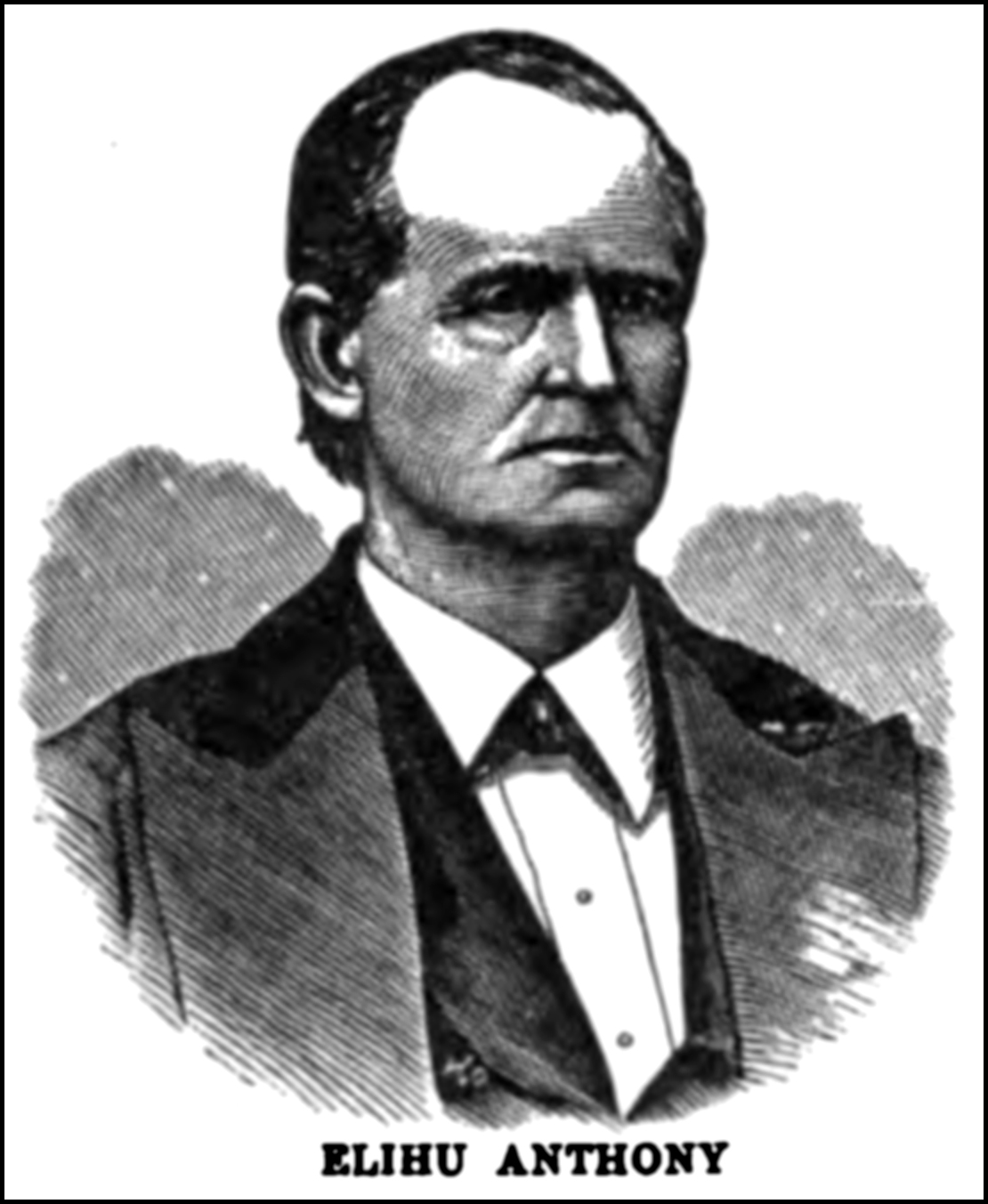
1851: As told by Elihu Anthony in 1885

Elihu Anthony
Elihu Anthony,
Santa Cruz County, California ...,
W. W. Elliott & Co., 1879
The first mail was brought to Santa Cruz on horseback over the mountains from Santa Clara in the winter of [18]'50. The mail consisted of one letter and two newspapers.... We hadn't enough mail to put in a bag until we began to receive a regular mail once a week in [18]'51. When the news was heard of a steamer arriving in San Francisco with the Eastern mail the whole white population waited anxiously for the mail, which brought them news from home and friends.


Loma Prieta by William Keith
Loma Prieta by William Keith, 1874
Lard & Davis had the first contract to carry the mail. This was in '51. Lard's boy, who carried the mail on a mule, once, while coming over the mountains, ran down a cub or young bear. He tried to make the cub come out, but couldn't make it do so. The mail bag was lashed to the saddle, you see, and when the young Lard whipped up the mule, the old bear, who was watching the proceedings, came after him. The boy heard the bear coming, and gave one glance around and then put the spurs to the mule. The bear gained on him and when near enough sprang on the mule's back, scraping the flesh off and taking the mail bag. I tell you when the boy reached town he was as pale as a ghost and frightened almost out of his wits. Well, to cut the story short, we sent a man back to find what mail the bear was kind enough to leave. The strangest thing of all, was that the man returned with the mail, but he reported that the bear had "chawed up" the leather bag and did not damage the mail.

Sunday, January 8, 2017

Recent Black Bear Sightings

1999: In August, County sheriff’s deputy Larry Roland saw a bear running across Lompico Road. “It ran down from the hillside on the left right in front of me and down into the creek,” Roland said.

Also in 1999, near Felton Nancy McFarlane reported a glimpse of what she thought could be a bear. A follow-up search by field scout Rich Coats discovered bear scat near Graham Hill Road. Click here for examples of black bear scat.

2001: A bear was hit and killed by a car on Skyline Boulevard near the Crystal Springs Watershed in June. Vicki Sliwa saw the bear lying in the road. “It was a Sunday afternoon, driving south on Skyline, and then suddenly, there it was, a bear lying in a heap on the gravel shoulder,” Sliwa said. “Traffic was light, but everybody was slowing down to look at it.”

By the time CalTrans and the Department of Fish and Game (DFG) arrived, the bear was gone. A DFG spokesman said that it was likely a passing driver illegally picked up the animal.

2008: Two sightings of black bears in the Santa Cruz Mountains were reported; one at Rancho San Antonio in the Los Altos Hills, and the other along Skyline Boulevard near Sanborn-Skyline County Park and Castle Rock State Park. 

The bear at Rancho San Antonio was spotted by a senior couple who saw the bear cross Rogue Valley Trail about a third of a mile east of the park’s pond. The other, along Skyline, was reported by two hikers.

Thursday, January 5, 2017

Billy Bruin Jr.

1891: In the spring of 1891, a two month old grizzly cub was captured on Mountain Charley's ranch in the Santa Cruz Mountains. Billy Bruin, Jr. was taken to the ranch of a Dr. Charles C. O'Donnell at Glen Ellen in Sonoma County. The ranch was an extensive mineral resort along Sonoma Creek.

Six months later Billy returned to Santa Cruz. He had been loaned by Dr. O'Donnell to the Native Sons California Parlor No. 1 to participate in the Admission Day parade through Santa Cruz.

Admission Day Arch 1891
Admission Day Arch, Pacific Avenue, Santa Cruz
San Francisco Chronicle, September 10, 1891
Santa Cruz, Cal, Admission Day 1888
While in Santa Cruz, Billy visited the offices of the Santa Cruz Surf newspaper and was described as “the most affectionate little fellow in the world and can give a bear’s grin and a bear’s hug in the most approved style, and without the least malice.”

Tuesday, January 3, 2017

Too Close of an Encounter

1854: Mountain Charley's neighbor, Lyman J. Burrell, had an encounter with a mother and her cub. His wife, Clarissa, wrote to her sister about the experience:

Lyman J. Burrell
"Last saturday afternoon Mr. Burrell and Birney were making a fence along the farther side of the garden a little before sundown they heard a great noise among the hogs that were feeding upon the carcass of a dead horse on the hill a short distance from them. Mr. B─ said he would go up the hill and see what was the disturbance he [sic] jumped over the fence with his ax in his hand and proceeded a few steps up the hill, when he was met by an old grizzly bear and her cub coming down at full speed, he brandished his ax at her, and shouted with all his might to frighten her, but they are an animal that never give even half the road, and it is not safe to wound them if you are within their reach, so Mr. Burrell either in turning to let her pass fell or she in her haste to go knocked him over, it was done so quick he could not tell which, as his feet were towards her she gave him one snap with her teeth on the left limb just above the knee leaving one large hole on the lower side and two smaller ones on the upper side of it she then run [sic] three or four steps and turned about to look at him, as she saw he did not follow her, she and her cub bounded off down the hill into the bush with all their might."

“Mountain Charley” McKiernan

1854: From the account told by John Schultheis in 1892.

Charles McKiernan and his friend Taylor were hunting for game on foot in the Santa Cruz Mountains. They successfully killed two deer and, since they had no horses to bring back their kill, they hung them in a tree. Close to sunset they saw a large grizzly feeding in the wild oats. McKiernan saw the bear first and said to Taylor: “See that big bear; now if we can kill him I consider we will have done a good days work.”

They started for a clump of oak trees to get a better shot at the bear and to climb if escape were necessary. It is likely that the blood on their hands from the deer was smelled by the grizzly as they can detect smells over a mile away.

Mountain Charley by Ralph Rambo
The grizzly charged, mouth open. Both men fired but their shots failed to kill the bear who charged at McKiernan. He hit the bear so hard in its ribs with his rifle that it bent the barrel leaving it useless. The bear rose on its haunches and bit McKiernan in the head through his right eye and left temple. He raised his arm to deflect a second bite and the bear bit his lower arm.

The bear then started for Taylor, who ran for his life. Taylor's dog ran between him and the bear. Taylor fell flat in the oats which hid him. The bear ran back towards McKiernan but jumped over him and ran into the woods.

Taylor returned to McKiernan, bandaged his head with his shirt, and left him with his revolver while he went to find a horse to transport McKiernan home.
Taylor reached McKiernan's house just as our storyteller, Schultheis, was arriving. He, Taylor, a gentleman from Tennessee and his man servant, along with a mule and a blanket went back for McKiernan.

Charles McKiernan by Andrew P. Hill
Schultheis then rode down to San Jose to fetch Dr. Bell. It was sunrise before they arrived back at Mountain Charley's. Dr Bell examined the wound a decided to cover the exposed brain with a metal plate.

The plate was fitted but after several weeks the wound did not heal. A visiting doctor from Santa Cruz examined McKiernan and advised removal of the plate which, having not been pure metal, had turned black and poisoned the wound.

After this the wound did heal but McKiernan suffered terrible pains. It wasn't until several years later, after consulting with a group of physicians, that the wound was reopened. The cause of the pain was discovered to be a clump of hair.


Osage City Free Press July 11, 1879
Though disfigured for life, McKiernan lived for 38 years after the gruesome attack.

Black Bears in the Santa Cruz Mountains

Occasionally, black bears were encountered in the Santa Cruz Mountains, perhaps in part as a result of the declining grizzly population.

1890: An Italian who worked as a "swamper" trimming felled trees into logs for a sawmill at the summit had a lively encounter with a black bear. Macaroni, as he was called, as his real name was too difficult to pronounce, borrowed a gun and “went up the canyon to shoot something.”

He disturbed a black bear that was taking a nap. After shooting at the bear, but only slightly injuring it, he found he had to run for his life. Realizing he would lose a straight race, he dodged round a large redwood, the bear dodged too. So began a race around the tree that by accounts lasted several hours.

Santa Cruz Sentinel: "At last, he remembered he had a gun in his hand and managed to load it, made a desperate spurt to catch up with the bear, and shot it in the back."

Two of the boys who went back with Macaroni to bring the dead bear in, declared that the Italian and bruin had worn a well-beaten track around the redwood. The bear weighed a little over 200 pounds. 

1899:  In December 1899, butcher W. H. Dool of Boulder Creek sent a 300 pound black bear to the Popular Meat Market in Santa Cruz. The bear had been shot by Henry Middleton in the Big Basin.

Middleton had “captured” a Gatling gun “from the Filipinos” and wanting to “experiment” with it took it to a place near his mill. He fired a single shot and saw a bear approaching. Middleton had long wanted to kill a bear and saw this as his opportunity. So, as the bear came running towards him, he fired a shot which entered the bear's head.

Santa Cruz Evening Sentinel: "Bruin saw he had no business with the Mayor of Boulder Creek, and decided that the Big Basin was too small to hold both. As the bear turned to run another shot was fired with fatal effect."

Monday, January 2, 2017

The Saratoga Bear

1979: In July, first one then two bears, possibly a mother and cub, were spotted several times in the Red Hill Road area of Saratoga. They enjoyed the honey from some hives belonging to Joseph Koscis on Peach Hill Road.

One, a youngster estimated between 150 and 200 lb from his paw print imprints in the ground, was chased up a tree by four dogs. When the dogs were called off the bear disappeared into the woods.

Department of Fish and Game wardens baited live traps and the bear(s) enjoyed the offerings but somehow escaped. Another two traps were set with honey, plums, tuna, cat food, strawberry jam, and goose food. This time one of the bears, estimated between 300 and 400 lb, was captured and transported to the Santa Lucia Mountains in Los Padres National Forest. Since the bear was “a little upset” Warden Dennis Baldwin said he’d wait a while before matching its paw print to ones taken on the Koscis property.

Santa Cruz Sentinel, July 29, 1979: "Although the bear is believed to be a “local” – one from the nearby Santa Cruz Mountains – the animal will be lifted, still inside the cage, onto a truck, and transported southward [to] a remote area of the Los Padres National Forest for release there."

Courtesy the Saratoga Historical Foundation Collection
In August, the Saratoga City council unanimously adopted a resolution proclaiming the fourth Saturday of each July as “Saratoga Bear Day.”

The second bear was spotted in January the following year again in the Peach Hill Road neighborhood. 

But this time the wardens did not trap the bear because "it is not causing any harm or damage."

A Bear on a Lark

He wanted to see the sights, but was not allowed.


It has often been mistakenly said that only grizzlies, not black bears, lived in the Santa Cruz Mountains. But as the grizzly population declined, black bears became more prevalent.

In September 1885, bear tracks were noticed on the lands of Davis and Cowell. It was thought that there were three bears; the size of one print was said to measure 13 by 6-1/4 inches. 

Big Tree Station, The J. Paul Getty Museum
Open Content Program
Hunters came down from San Francisco with a variety of weapons, from a bowie knife to a small Gatling gun. They spent several days scouting the area and camping with the Bangos at Big Trees, now Henry Cowell Redwoods State Park. 

The San Francisco Call reported: "A party of hunters returned from the Santa Cruz mountains Thursday, arriving by the narrow gauge route, at the foot of Market street. They had been on a hunt for "big game," and that they had met with glowing success was evident from the spoils of the chase which they bought with them."

They had brought with them, on the train from Felton, three black bears. Two they had killed, but one, a feisty young one, was brought back alive.  

The young bear, who had entertained the group at the camp for several days and had become "very tame," was muzzled and was held "a not unwilling" captive by means of a long chain. He was reportedly not homesick for his mountain home and "displayed a playful disposition."

As the hunters saw to their baggage they secured the bear's chain to a pole. Bruin, however, managed to escape his pole and first decided to explore the railroad depot ticket window, much to the surprise of the ticket-master who was "astonished when he saw a long snout backed by a hairy head and shoulders, inserted in his window." As the bear made a "playful" punch with is paw towards him, as if he wanted to "shake hands," the ticket-master quickly shut the window with a bang. 

Disgruntled the bear then decided to investigate the Market Street cable car system where he encountered a huge Newfoundland dog. The dog, barking and growling, ran up to the bear who with a smack of his paw sent the poor dog rolling down the wharf. 

His hunters, who intended to keep bruin for a pet, soon caught up with him, and once again he became their captive. This made poor bruin very grumpy, a characteristic he continued to display throughout his visit to the wharf.

Perhaps the Redwood group of trees known as the "Bear's Den" on the Redwood Loop Trail at Henry Cowell Redwoods State Park, the site of Camp Bango, was named for this unlucky black bear. 

Not the Last Grizzly in the Santa Cruz Mountains

1885: In June 1885, a grizzly entered the yard of Sanford Blodgett on Ben Lomond Mountain, now Bonny Doon, and stole a hog. His son Orrin prepared to give the bear a "warm reception" should he return, which he did a few days later.

As the bear was clearing off the dirt with which he had buried the hog, Orrin, with a wagon bolt in his gun pulled the trigger and the bolt struck the bear in the eye killing him instantly. The 600 pound grizzly was brought to Chase's market in Santa Cruz and hung on exhibition prior to being cut up. Steaks from the bear were enjoyed by members of the Santa Cruz Sentinel staff.

Years later, in 1931, Orrin related the story in a letter to Walter Welch. He recalled selling the meat for ten cents per pound

California Fish and Game: "I didn't save any part of the bear, for which I have since been sorry, as it proved to be the last grizzly killed in this section."

Unfortunately, this sentence has been misinterpreted and most authoritative works refer to this bear as the last grizzly in the Santa Cruz Mountains. Orrin used the word section, as in a measure of land, where a section is one of the 36 numbered subdivisions, each one square mile, or 640 acres, of a township.

For more information on the Public Land Survey System CLICK HERE.