Showing posts with label Grizzly. Show all posts

Thursday, August 29, 2024

Santa Clara's Day

Excerpt from: Scenes of Wonder and Curiosity, Hutchinson’s California Magazine, April 1859. 

August 12, 1851.

But the greatest of all sources of gratification to all classes and sexes, were the bull-fights, and bull and bear fights. As San Jose and her sister Mission of Santa Clara were the most flourishing of all the Missions, and as the latter was the especial favorite of all the Patron Saints, her bull-fights were the best in the country. After the discovery of gold, and before their grounds were much settled up by the Americans, they continued them with more zeal and magnitude than ever, until prevented by the town authorities in 1851, which was the last time they were permitted within the limits of the town.

On this occasion it was acknowledged to be the most extensive they had ever had; and was continued for nearly a week. Twelve bulls, two large grizzly bears, and a considerable number of Indians were engaged, at different times, for the amusement of the assembled multitude. In the second day’s encounter, four Indians were killed, and several wounded by the bulls; the loss of the horse seemed to cause far more regret than did the Indians. When the latter were gored by the sharp horns of the bull, the band would strike up a lively tune to smother his cries or moans, and the people appeared immensely pleased at the performance.

The Padre in charge at the time was a Franciscan, and evidently enjoyed the sport, but he was removed the following year, and a Jesuit appointed in his place, who denounced all such cruel sports from the altar, to the great displeasure of the Californians generally.


California Grizzly Bear
Scenes of Wonder and Curiosity,
Hutchinson’s California Magazine, May 1858.


Sunday, August 27, 2017

Bears Like Bacon

1889, Official Map of Santa Cruz County,
A. J. [Andrew Jackson] Hatch
1877: C. C. [Charles Campbell] Rodgers, founder of the Mountain Echo newspaper published in Boulder Creek, had an encounter with a mother grizzly and her two cubs. Rodgers was living on his homestead at the source of Boulder Creek at Bull’s Spring (also known as Bull Springs). Bull’s Spring is close to Highway 236 on the edge of Big Basin State Park and on the Skyline-to-the-Sea trail.

Headwaters of Boulder Creek at Bull's Spring, with
a small concrete dam through which the creek flows.

He had not yet built his cabin on the land and so slept on the ground under the stars. Around sunrise one morning he awoke to find a large female grizzly eating his discarded bacon rinds just a few feet from the end of his bed, with two cubs a little further away. Rodgers and the bear looked at each other for a brief time - that seemed like an eternity to the former. He then sprung to his feet and without stopping to dress he “clasped the nearest tan-oak in a loving embrace” and made a desperate attempt to climb it. Fortunately, for Rodgers, the bear gave a disgruntled growl and sidled slowly off into the nearby brush.

The area has since been logged.
That very same day Rodgers constructed a scaffold, in a “bunch of redwoods” well up from the ground, and used it to sleep on until he had completed his cabin. He bored holes in a redwood into which he drove wooden pins so as to make a ladder up which he could climb to the scaffold high in the tree.


In October the same year, C. C. Rodgers had yet another encounter. The Santa Cruz Weekly Sentinel reported:

“On the head of Boulder Creek, last week, C. C. Rodgers, while ascending a trail, found himself in the rear of a couple of grizzly cubs. They hurried along, a few feet apart, the hunter getting his Henry rifle in order to give them a salute. Hearing the pattering of feet behind him, he turned his head and beheld mother bruin, open mouthed, long-haired and shaggy, and apparently as large as an elephant. Thinking that there might be something in the bushes that he wanted he turned aside, breaking one side of his bridle in doing so. Held by one rein around and around swung his terrified animal, and the grizzly kings of the forest, together and satisfied that neither was hurt, moved off at their leisure, apparently indifferent to the presence of the man with the broken bridle.”


Sunday, June 11, 2017

Hunting and Trapping

Initially, grizzlies were not hunted for food, but for their skins, for the thrill, and because of their threat to livestock.

Grizzly Bear Trap
Grizzly Bear Trap
from The Newhouse Trappers Guide, 1914.
Before the introduction of the repeating rifle, killing a grizzly with a shot gun was very difficult. It was rare that a single bullet would suffice, so the best option was to trap and then kill the animal.

Bayard Taylor, 1849: "We had no other arms than pistols and knives and no horses of sufficient fleetness to have ventured an attack with safety; so we passed on with many a wistful and lingering look, for the gray hide of one of those huge beasts would have been a trophy well worth the capture."

Strychnine LabelBesides traps, poisons, such as strychnine and phosphorus, were also used. Often a grizzly would not eat an entire animal in one sitting but come back the next day to finish it off.
The left remains would be poisoned in anticipation of the grizzly’s return. See the blog post: Treed by a Dead Bear.

Santa Cruz Weekly Sentinel,1872: "Some twenty [bears] have been killed in this county recently, in that way. Mr Miller returned to his ranch yesterday with four bottles of strychnine to cure bear meat, he having previously fought three bears from a tree in his oat field, and had only an ax to keep the old she bear and her cubs from climbing the tree."

Mrs. Winslow's Soothing Syrup Label
Santa Cruz Weekly Sentinel, 1872: "Varments of the grizzly tribe are peculiar, and the best medicine we can think of is Mrs. Winlow’s soothing syrup, especially for the cubs, when they set up that hideous howl so graphically described. For the older ones, Galena pills [lead shot] – 16 to the pound – from Dr. Henry’s repeater or the Parker gun with good strong powder would no doubt be potent, but in case of failure, try strychnine."

Mrs. Winslow’s syrup contained morphine and was responsible for the drug addition and death from overdose of countless infants and children.

A Text Book for the Professional Teacher, 1910: "The Food Department of the United States has established a list of medical preparations, “soothing syrups,” which are referred to as “baby-killers.” The use of this class of products is certainly to be condemned, and the list as given by the United States Government chemists includes the following preparations: Mrs. Winslow's Soothing Syrup (morphine sulfate)."   


Thursday, May 25, 2017

Treed by a Dead Bear

1872: Near the White House Dairy, on Steele's ranch, near Pigeon Point, a monster grizzly bear had killed a cow. Mr. B[arzilla] M. Scofield, the owner of the cow, placed a bucket of syrup, well poisoned with strychnine, near the place where the cow had been killed.

The next night the bear came back and ate the syrup and died on the spot.

In the morning a group of people, including a Chris Coffin, a teamster, approached the spot. They saw the bear quietly sleeping near the place where the poison had been left. The whole party were seized with fright that they were so close to a such a  huge a monster, (he was about twelve hundred pounds) and Chris, hurriedly climbed a tree near by, while the rest of them made their escape, running as fast as they could, thinking the bear was at their heels.

Hours passed and the bear failed to wake up. Chris first ventured a whistle, but that did not wake him so then he gave a huge bark, like a dog, this did not move him. 

So Chris came to the conclusion that the bear had eaten too much and was very fast asleep. So he slowly climbed down.

How do you think he felt on finding that the bear was dead, not asleep after all, after spending so long in the tree?

As reported by the Santa Cruz Weekly Sentinel: "Chris. Says [sic] the balance of the company have not returned yet, so badly were they frightened at the sight of the dead bear."


Tuesday, May 23, 2017

Paul Sweet’s Escape

Circa 1850s: There are several versions of this story that have been recounted over the years. This is as told by Richard C. Kirby, local tanner and husband of libertarian Georgiana Bruce Kirby, to Caroline H. Dall and published by her in My First Holiday, 1881:

"We drove by the old tannery once kept by Paul Sweet. When Mr. K. first came to it, great grizzly bears, each weighing from eight hundred to a thousand pounds, used to steal into the cattle-yard every night. On one occasion one of these creatures caught a calf by the nape of the neck, and leaped a tall fence. A revolver was fired, but the animal dropped the dead calf and escaped. The next day they followed the bear with hounds, and took him.


Paul Sweet and his wife Margarita
Paul Sweet and his wife Margarita,
Santa Cruz Museum of Art & History
One day Paul met a grizzly bear with cubs, in the wood. She caught him by the waistband, plunged into a hollow, dug a large hole in the sand, and buried Paul out of sight. After a while the tanner worked his way up to the surface, but Mistress Grizzly was watching. She darted forward, and snugly tucked him in with two or three strokes of her big paw. This time Paul was more wary. The sand was loose, and after the creature had gone off to her cubs, he crawled home entirely unhurt."

You can read more about Paul Sweet by clicking here.

Casa del Ursa - Rancho del Oso

In 1864, Waddell’s Creek was also known as Casa del Ursa. Ursa being Latin for Bear, Casa being Cottage. It was named for the large number of grizzlies that lived in the area.

"Waddell’s Mill – W. W. Waddell & Co. of Santa Cruz have been engaged, for more than two years last past in the extensive preparations for manufacturing lumber. Their situation is below New Year’s Point (punta den ano nueve) on the Casa del Ursa, more familiarly known as Waddell’s creek."

Grizzly at the Rancho del Oso Nature & History Center
Grizzly at the Rancho del Oso
Nature & History Center.
Later it became Rancho Del Oso (Spanish for Bear Ranch) and is now part of Big Basin Redwoods State Park. The Rancho del Oso Nature and History Center has on display a grizzly bear that was shot with a bow and arrow in the Yellowstone area by Arthur Young on a special expedition with Saxton Pope to secure a group of grizzlies for display at the California Academy of Sciences in 1920.


The bear weighed nearly 1000 pounds when it was shot and skinned. The kill was documented in the book Hunting with the Bow and Arrow by Saxton Pope:

"Next day, just at sunset, we got our first view of the great bear of Dunraven Pass. He was coming down a distant canyon trail. He looked like a giant in the twilight. With long swinging strides he threw himself impetuously down the mountainside. Great power was in every movement. He was magnificent!"

"... the monster grizzly was romping back and forth in the shaded forest not more than sixty-five yards away. With deep booming growls like distant thunder, he voiced his anger and intent to kill. As he flitted between the shadows of the trees, the moonlight glinted on his massive body; he was enormous.

Young discharged three arrows at him. I shot two. We should have landed, he was so large. But he galloped off and I saw my last arrow at the point blank range of seventy-five yards, fall between his legs. He was gone. We thought we had missed the beast and grief descended heavy upon us. The thought of all the weary days and nights of hunting and waiting, and now to have lost him, was very painful."


Archer Brings Down 4 Grizzlies 1920 News Article
San Francisco Chronicle,
July 4, 1920.
"... We had no idea that we hit the great bear, but just to gather up our shafts, we went over the ground where he had been.

One of Young's arrows was missing! That gave us a thrill; perhaps we had hit him after all! We went further in the direction he had gone; there was a trace of blood.

We trailed him."

"... We let ourselves down the sheer descent, came upon a narrow little ledge, and there below us lay the huge monster on his back, against a boulder, cold and stiff, as dead as Caesar. Our hearts nearly burst with happiness.

Arthur Young Slays the Monarch of the Mountains
From Hunting with Bow and Arrow
by Saxton Pope, 1923.
There lay the largest grizzly bear in Wyoming, dead at our feet. His rugged coat was matted with blood. Well back in his chest the arrow wound showed clear. I measured him; twenty-six inches of bear had been pierced through and through. One arrow killed him. He was tremendous. His great wide head; his worn, glistening teeth; his massive arms; his vast, ponderous feet and long curved claws; all were there. He was a wonderful beast. It seemed incredible. I thumped Young on the shoulder: 'My, that was a marvelous shot!'"


In their souvenir booklet about the North American Hall, the California Academy of Sciences wrote:

"It is deeply regretted that this Museum cannot show a habitat group of grizzlies from California, 
but the next best thing has been done; a group of a closely related form, the Imperial Grizzly (Ursus horribilis imperator), still existing in north-western Wyoming, is here presented.

California Academy of Sciences Postcard
California Academy of Sciences Postcard.
Photograph by Ansel Adams.

The individuals arranged in this group were taken with bow and arrow in the Yellowstone Park region in July, 1920, by the late Dr. Saxon Pope and Mr. Arthur Young, both of San Francisco."


Grizzly Bear, Ursus arctos horribilis  on display at the Rancho del Oso Nature & History Center
Grizzly Bear, Ursus arctos horribilis 
on display at the Rancho del Oso
Nature & History Center.

Monday, May 22, 2017

"Chawed up"

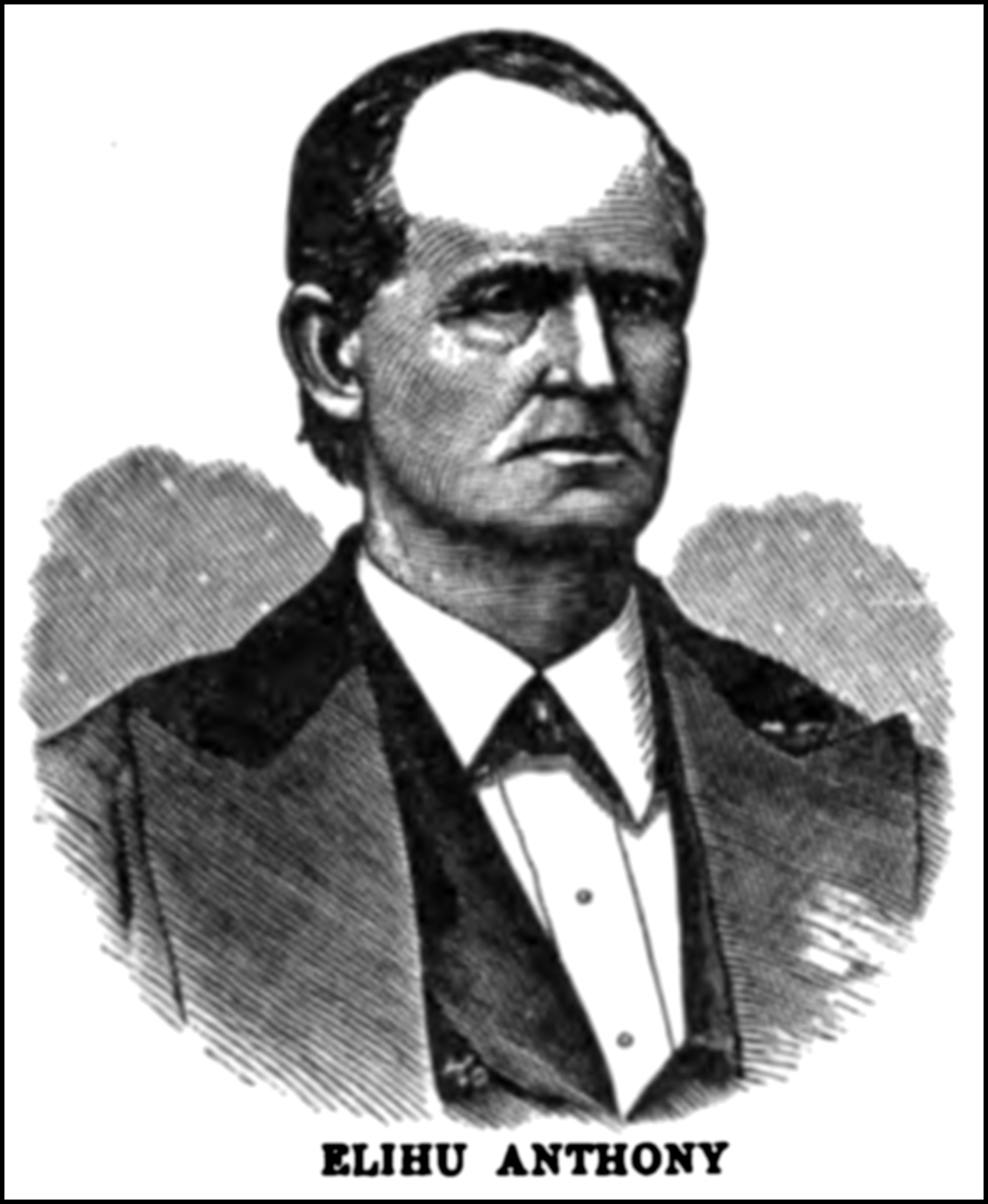
1851: As told by Elihu Anthony in 1885

Elihu Anthony
Elihu Anthony,
Santa Cruz County, California ...,
W. W. Elliott & Co., 1879
The first mail was brought to Santa Cruz on horseback over the mountains from Santa Clara in the winter of [18]'50. The mail consisted of one letter and two newspapers.... We hadn't enough mail to put in a bag until we began to receive a regular mail once a week in [18]'51. When the news was heard of a steamer arriving in San Francisco with the Eastern mail the whole white population waited anxiously for the mail, which brought them news from home and friends.


Loma Prieta by William Keith
Loma Prieta by William Keith, 1874
Lard & Davis had the first contract to carry the mail. This was in '51. Lard's boy, who carried the mail on a mule, once, while coming over the mountains, ran down a cub or young bear. He tried to make the cub come out, but couldn't make it do so. The mail bag was lashed to the saddle, you see, and when the young Lard whipped up the mule, the old bear, who was watching the proceedings, came after him. The boy heard the bear coming, and gave one glance around and then put the spurs to the mule. The bear gained on him and when near enough sprang on the mule's back, scraping the flesh off and taking the mail bag. I tell you when the boy reached town he was as pale as a ghost and frightened almost out of his wits. Well, to cut the story short, we sent a man back to find what mail the bear was kind enough to leave. The strangest thing of all, was that the man returned with the mail, but he reported that the bear had "chawed up" the leather bag and did not damage the mail.

Wednesday, January 11, 2017

California Indian Bear Hunting

In his book The Ohlone Way, author Malcolm Margolin tells the story of a bear hunt as described by a descendant of the Yokut people, neighbors of the Ohlone:

Yokut Indians, neighbors of the Ohlone,
hunting on the bay of San Francisco.
Drawn by Louis Choris in 1815
"… twelve men each with bow and arrows started for the bear’s cave.…[they] arranged a semi-circle of stakes, driving them into the ground in front of the cave. They took shooting positions behind these. Holoansi [the first runner] went to the cave entrance to lure the bear …"

In the book Sixty Years in California, William Heath Davis describes a bear hunt during the Mission era:

"The Indians of California used artfully constructed traps for bears. They dug a large hole, about five or six feet deep, directly under the branch of a tree, covered it with brush and a light coating of earth, and made it all smooth on top. From the branch would be suspended a quarter of beef. Bruin would scent the meat, and, approaching without suspicion, would fall headlong into the pit. Shooting with bow and arrows, the Indian, having come out of his place of concealment, would presently kill the bear."

Ohlone and Grizzlies

Prior to 1769, the Ohlone were the only peoples to inhabit the Santa Cruz area. Their total population once numbered 10,000 or more with a least 600 villages in and around Santa Cruz. Village populations ranged from 50 to 500. In the smaller seasonal villages, the villagers would take advantage of seasonal sources of food, such as game, fruits, and nuts.

Many foods were favorites of both the Ohlone and grizzlies. Acorns, one of a grizzly's favorite foods, was a staple food for the Ohlone. It likely resulted in confrontations during the acorn harvest season or a grizzly raid on a village acorn storage site. Other foods they both ate included seeds, berries, roots, deer, fish, and whale. 

In 1776, while in what is now San Mateo County, the second Anza Expedition encountered, and killed, a large grizzly. Father Font wrote in his diary:

"There are many of these beasts in that country, and they often attack and do damage to the Indians when they go to hunt, of which I saw many horrible examples."

In the book Three Years in California [1846-1849], Walter Colton describes the grizzly:

"Nature has thrown over him [the grizzly] a coat of mail, soft indeed, but impervious to the storm and arrow of the Indian."

Archaeologist Mark Hylkema:

"…grizzly bear remains [are found] in the archaeological sites, and it is interesting to recognize that these large semi-aggressive omnivores co-existed with native people for millennia. The skins were used by high status men and various membership societies used them as totems."

"…[grizzly remains are] not infrequently seen as ornament and display among human burials. They occur as canine teeth pendants with drilled apertures for stringing, and claw necklaces." 

In 1776, while on the San Francisco Peninsula, Father Font described bear skin clothing in his diary:

"Among the men I saw a few with a little cape like a doublet reaching to the waist and made of bear skin, and by this mark of distinction I learned that these were the owners or masters of the launches."


Grizzly Bear Claw
Collection of the Los Altos History Museum
This California grizzly bear claw was found in a Los Gatos cave by Albert Thirkell. It is not known what date it was found.

It was given to Los Altos Hills amateur historian Florence Fava around 1970. She wrote:

“This is but one of several which made up a necklace which crumbled when removed from the cave it was found in.”


Saturday, January 7, 2017

Rancho Punta del Año Nuevo

Isaac Chapman Steel,
The History of San Mateo County, California,
1883, B. F. Alley Publisher
1867: Once Rancho Punta del Año Nuevo, of which a part became the Isaac Steele Dairy Ranch, abounded with grizzlies. The Ranch, now part of Año Nuevo State Park, is located 21 miles north of Santa Cruz and is adjacent to Big Basin Redwoods State Park. An 1867 encounter with a grizzly above the garden at Isaac Steel’s home, Green Oaks, was chronicled in À La California by Col. Albert S. Evans, 1873: 

"Mr. Steele pointed out where a fearful scene was enacted just above his garden in 1867. An old she-bear came down with her two cubs in the day-time and seized a hog. Two men employed on the ranch, both Portuguese, started to rescue the hog. One had a gun, the other only a garden mattock. They found her by the fence eating the hog, and yelled at her to drive her away. She accepted the challenge, and with a growl dashed over the fence and after them. The man with the gun pointed it full-cocked at her head, but, as he afterward admitted, when he felt her hot breath in his face, became demoralized, dropped the weapon and jumped over the fence. His companion
Included in the National Register Nomination Form, 1976
Courtesy San Mateo County Historical Association
followed his example, and they jumped back and forth for some minutes with the enraged brute in close pursuit. At length the man who had the mattock started to run across the field toward the house; but the bear caught him, threw him down, bit him through the thigh, and then started after the other assailant. Had the wounded man feigned death he would have been saved; but not understanding grizzly fighting, he jumped up and began shouting for help. At this she turned upon him more infuriated than ever, and, seizing him by the side, literally tore him in pieces, killing him instantly. The other man escaped. The next morning the bear, bear-like, returned to finish the hog, and was shot by a party lying in wait for her."

Thursday, January 5, 2017

The True Story of William Waddell

1875: On Friday October 1, William Waddell and John Bradley went deer hunting in the gulches behind Waddell's mill. After crossing Steele Gulch they parted, Waddell to the right, Bradley to the left. Waddell found the remains of a deer that he thought had been taken by a mountain lion. His dog caught a scent which it followed up a ravine. The dog began barking then moments later it came bounding towards Waddell pursued by a grizzly.

The bear attacked Waddell in the thigh. The dog immediately attacked the bear which let go of Waddell to again pursue the dog. The two disappeared in the distance. Waddell fired his gun to alert Bradley to his crippled situation. Bradley found Waddell with his thigh badly lacerated and bruised. 
Dr. Charles L. Anderson

Waddell was taken home by horse and treated by Dr. Charles Anderson who later stated that his wounds “were severe but under ordinary circumstances would not be considered serious.”

Waddell died six days later of suspected Pyaemia, a form of infection that was almost always fatal before the introduction of antibiotics in the 1930s. 


Site of William Waddell's Mill in Big Basin State Park
William Waddell, who came to California in the early 1850s, was a lumberman who owned and operated a sawmill. He is the namesake of Waddell Beach and Waddell Creek in Rancho Del Oso (Bear Ranch) which is now part of Big Basin State Park.

Grizzly in Big Basin - Too Frightened to Stay

1890: In May 1890, Jacob “Hans” Mandel, a cook at a sawmill near Boulder Creek, and two friends had an encounter with a bear while on a hunting trip in the Big Basin. As the men rested in the evening after the day's work they heard a noise in the brush. On looking around they spotted a huge grizzly bear in the distance. The grizzly saw them and moved towards them "his eyes gleaming like two electric lights."

The men ran for a mile with the grizzly gaining on their heels. They reached a tall climbable tree and took refuge in it just as the grizzly caught up. Unable to reach the men, the grizzly just remained at its base for several hours. Afraid to move, the men stayed in the tree all night on their "uncomfortable perches." In the morning they realized the bear had departed, so they climbed down the tree and "made haste to reach Boulder."


The experience was too much for Hans who promptly resigned as cook to return to the safety of Santa Cruz. This was a great loss to the sawmill crew as Hans was famed for his corn beef hash which was considered "a rare delicacy." And the different ways in which he served mush and milk for breakfast had given him a reputation which made him the "envy of the other chefs in the neighborhood."

Billy Bruin Jr.

1891: In the spring of 1891, a two month old grizzly cub was captured on Mountain Charley's ranch in the Santa Cruz Mountains. Billy Bruin, Jr. was taken to the ranch of a Dr. Charles C. O'Donnell at Glen Ellen in Sonoma County. The ranch was an extensive mineral resort along Sonoma Creek.

Six months later Billy returned to Santa Cruz. He had been loaned by Dr. O'Donnell to the Native Sons California Parlor No. 1 to participate in the Admission Day parade through Santa Cruz.

Admission Day Arch 1891
Admission Day Arch, Pacific Avenue, Santa Cruz
San Francisco Chronicle, September 10, 1891
Santa Cruz, Cal, Admission Day 1888
While in Santa Cruz, Billy visited the offices of the Santa Cruz Surf newspaper and was described as “the most affectionate little fellow in the world and can give a bear’s grin and a bear’s hug in the most approved style, and without the least malice.”

Wednesday, January 4, 2017

Lion-hearted and Brave Old Dog Saves the Day

1865: On April 16, Ethelbert Harris who lived about twenty miles north of Santa Cruz on the El Jarro Rancho, near Davenport, encountered a grizzly about a mile and a half from his house. His dogs had been “worrying” her, and so she was quite aroused. He raised his rifle to fire at her but it misfired. He tried to strike her with it but tripped and fell. The grizzly pounced on him, lacerating his right leg.

His dog, Towser, “the truest and most faithful friend man ever had” came to his rescue by trying to engage to bear giving Harris the chance to climb a nearby tree. He called off Towser and the other dogs and after about fifteen minutes the bear had departed and, faint from the loss of blood, he climbed down the tree.


Santa Cruz Sentinel,
September 30, 1992
The whole incident was witnessed by his adult son Sandero and by William Cook who were both in the safety of neighboring trees. The two men helped him back to the house and it was hoped that the wound would heal. Unfortunately, it did not and had to be amputated. The leg was buried in a nearby cemetery and a picket fence erected around it.

The Harris family eventually moved to Monterey and the land on which the leg was buried became part of McCrary’s Big Creek Lumber’s holdings.

According to historian Sandy Lydon, it wasn’t until years later, when Donald Clark was researching place names for his books Santa Cruz County Place Names and Monterey County Place Names that he discovered that the rest of Harris was buried in Pleyto Cemetery in South Monterey County.

In July 1992, with the help of the McCrary family, a Harris family reunion was organized at the site of the burial of the leg. “Among the family mementos brought for display were the barrel of the rifle that had misfired on that fateful day and one of the peg legs Harris wore as a result of it.”

Tuesday, January 3, 2017

Too Close of an Encounter

1854: Mountain Charley's neighbor, Lyman J. Burrell, had an encounter with a mother and her cub. His wife, Clarissa, wrote to her sister about the experience:

Lyman J. Burrell
"Last saturday afternoon Mr. Burrell and Birney were making a fence along the farther side of the garden a little before sundown they heard a great noise among the hogs that were feeding upon the carcass of a dead horse on the hill a short distance from them. Mr. B─ said he would go up the hill and see what was the disturbance he [sic] jumped over the fence with his ax in his hand and proceeded a few steps up the hill, when he was met by an old grizzly bear and her cub coming down at full speed, he brandished his ax at her, and shouted with all his might to frighten her, but they are an animal that never give even half the road, and it is not safe to wound them if you are within their reach, so Mr. Burrell either in turning to let her pass fell or she in her haste to go knocked him over, it was done so quick he could not tell which, as his feet were towards her she gave him one snap with her teeth on the left limb just above the knee leaving one large hole on the lower side and two smaller ones on the upper side of it she then run [sic] three or four steps and turned about to look at him, as she saw he did not follow her, she and her cub bounded off down the hill into the bush with all their might."

“Mountain Charley” McKiernan

1854: From the account told by John Schultheis in 1892.

Charles McKiernan and his friend Taylor were hunting for game on foot in the Santa Cruz Mountains. They successfully killed two deer and, since they had no horses to bring back their kill, they hung them in a tree. Close to sunset they saw a large grizzly feeding in the wild oats. McKiernan saw the bear first and said to Taylor: “See that big bear; now if we can kill him I consider we will have done a good days work.”

They started for a clump of oak trees to get a better shot at the bear and to climb if escape were necessary. It is likely that the blood on their hands from the deer was smelled by the grizzly as they can detect smells over a mile away.

Mountain Charley by Ralph Rambo
The grizzly charged, mouth open. Both men fired but their shots failed to kill the bear who charged at McKiernan. He hit the bear so hard in its ribs with his rifle that it bent the barrel leaving it useless. The bear rose on its haunches and bit McKiernan in the head through his right eye and left temple. He raised his arm to deflect a second bite and the bear bit his lower arm.

The bear then started for Taylor, who ran for his life. Taylor's dog ran between him and the bear. Taylor fell flat in the oats which hid him. The bear ran back towards McKiernan but jumped over him and ran into the woods.

Taylor returned to McKiernan, bandaged his head with his shirt, and left him with his revolver while he went to find a horse to transport McKiernan home.
Taylor reached McKiernan's house just as our storyteller, Schultheis, was arriving. He, Taylor, a gentleman from Tennessee and his man servant, along with a mule and a blanket went back for McKiernan.

Charles McKiernan by Andrew P. Hill
Schultheis then rode down to San Jose to fetch Dr. Bell. It was sunrise before they arrived back at Mountain Charley's. Dr Bell examined the wound a decided to cover the exposed brain with a metal plate.

The plate was fitted but after several weeks the wound did not heal. A visiting doctor from Santa Cruz examined McKiernan and advised removal of the plate which, having not been pure metal, had turned black and poisoned the wound.

After this the wound did heal but McKiernan suffered terrible pains. It wasn't until several years later, after consulting with a group of physicians, that the wound was reopened. The cause of the pain was discovered to be a clump of hair.


Osage City Free Press July 11, 1879
Though disfigured for life, McKiernan lived for 38 years after the gruesome attack.

Monday, January 2, 2017

Not the Last Grizzly in the Santa Cruz Mountains

1885: In June 1885, a grizzly entered the yard of Sanford Blodgett on Ben Lomond Mountain, now Bonny Doon, and stole a hog. His son Orrin prepared to give the bear a "warm reception" should he return, which he did a few days later.

As the bear was clearing off the dirt with which he had buried the hog, Orrin, with a wagon bolt in his gun pulled the trigger and the bolt struck the bear in the eye killing him instantly. The 600 pound grizzly was brought to Chase's market in Santa Cruz and hung on exhibition prior to being cut up. Steaks from the bear were enjoyed by members of the Santa Cruz Sentinel staff.

Years later, in 1931, Orrin related the story in a letter to Walter Welch. He recalled selling the meat for ten cents per pound

California Fish and Game: "I didn't save any part of the bear, for which I have since been sorry, as it proved to be the last grizzly killed in this section."

Unfortunately, this sentence has been misinterpreted and most authoritative works refer to this bear as the last grizzly in the Santa Cruz Mountains. Orrin used the word section, as in a measure of land, where a section is one of the 36 numbered subdivisions, each one square mile, or 640 acres, of a township.

For more information on the Public Land Survey System CLICK HERE.