Monday, September 2, 2024

Escape from the Zoo

In 1919, after a hunting trip to Humboldt county, Mr. and Mrs. Deming Wheeler bought home a black bear cub. Mrs Wheeler had shot the mother and the following day they found the cub in a cave close to the Tish-Tang-A-Tang river after which the bear was named.

It was described as a "pet bear cub." It was not soon before the "pet" was placed in the De Laveaga Park zoo. A second bear was donated later that year. She was caught in Morgan Valley, Lake County. Deputy State Fish and Game Commissioner J. D. [Dave] Dondero donated him to the zoo, so she was named Dera for short. A bear pen was built at to zoo for the two bears and in October 1919 they were turned out into it.  The Sentinel advised "If you want to make the bears happy when you go out to see them, take them fruit, they love it.

The following year in July, the bears escaped. The larger was caught very quickly, but the smaller evaded capture. This one had escaped the week before only to be captured on Blackburn Gulch Road. The hope was, that being so young and very domesticated, he would return home of his own accord. He had been missing over three weeks when he was spotted near Soquel. 

But, it wasn't until October 28, that the fate of the bear was sealed. He was shot by J. C. Abner who was living on the Kennedy Ranch on the Laurel branch of Soquel Creek. The bear was shot because he was eating Abner's chickens and quote "otherwise making himself obnoxious." He also feared for his children since the animal was "no longer in the infant class."

A photograph of the remaining bear eating the bars of his cage circa 1920 can be found HERE courtesy UCSC, McHenry Library, Special Collections, Santa Cruz County Historic Photograph Collection.

In 1933, when the park decided to close the zoo. The zoo's cinnamon bear, reputedly went to "J. M Sizelove, of the Santa Cruz-Watsonville Highway." According to local historian Ross Gibson, this bear's name was Chilcano.

Stationed on a Scaffold

In 1859, a grizzly killed a two-year-old heifer belonging to Soquel pioneer rancher Nathaniel Holcomb. 

Fellow Soquelian Henry White erected a scaffold close to the dead animal with the expectation that the bear would return. Stationed on the scaffold with his rifle "he waited but a few minutes after sunset, when the shaggy monster made his appearance…"

As the bear approached the carcass, Henry fired his rifle and killed it with a single shot. It weighed about 700 pounds.

A year later White's services were again called upon. A grizzly killed an ox that belonged to Bradley and Nichols, a few hundred yards from their sawmill on Soquel Creek. Again, knowing that the animal would return, Henry waited for him and when he did, Henry shot him through the heart and killed him instantly.


Saturday, August 31, 2024

He Bit the Bear!

Excerpt from: Game Reminiscences of Yesteryears by Walter R. Welch, California Fish and Game.

Palo Alto, March 13, 1931

Dear Friend Walter — During the late sixties a Frenchman by the name of Barbone, while fishing in Pilarcitos Creek, in San Mateo County, came onto a grizzly bear. He turned and tried to make his getaway, but the bear was too quick for him, overtook him and grabbed him by the thigh. Barbone succeeded in breaking the bear’s hold on his thigh, but it grabbed him by the arm, and he grabbed the bear by the nose with his teeth, whereat the bear let go and so did Barbone, and both started in opposite directions. Barbone’s injuries, while serious, were not fatal.

Subsequently this bear began to kill cattle on the Dennison Ranch, located near Half Moon Bay, and was finally killed by my uncle, Patricio Soto, with a gun used to shoot whale, that he had secured from a whaling station then located on San Pedro Point, near Half Moon Bay.

Uncle dug a hole in the side of a hill, baited the bear and when it came, fired one shot at it. The bear was wounded, fell into a gully, crawled into the woods and was never seen or heard of after that…

                        Yours truly,

                        John Lucas Greer.


Friday, August 30, 2024

A Visit to the San Francisco Bay

Excerpt from: A Voyage of Discovery, Into the South Sea and Beering's Straits, for the Purpose of Exploring a North-east Passage, 1815-1818, at the Expense of His Highness the Chancellor of the Empire, Count Romanzoff, in the Ship Rurick by Otto von Kotzebue.

1816:

October 23d. To-day, the Governor had prepared us an interesting spectacle, in a fight between a bull and a bear; the latter are here so numerous, that you have only to go a mile from the habitations into the woods, to meet them in great numbers. The species is distinguished from ours, by its pointed head and its ash grey colour; they are likewise bolder and more lively than ours. Not withstanding this, the dragoons here are so active, and courageous, that they are sent on horseback into the forests for a bear as we would order a cook to bring a goose from the pen. Three dragoons on horseback, provided only with a noose, are sufficient to overpower a bear; in this kind of chase, they endeavour always to keep him in the middle, and to provoke him. As soon as the furious animal is going to rush on one of the horsemen, the other throws the noose, which is fastened to the saddle by strong thongs, round his fore-leg, and spurs his horse, by which the bear is thrown down; the other takes advantage of this moment, and throws the noose round his hind-leg, and while he lies without being able to move, the third ties all his four feet together, and he is thus carried home without any danger. In this manner the dragoons had brought a bear to-day, while others had caught a wild bull in the same mode. The cattle, which are left the whole year in the pasture, become wild; and when one is to be killed, it is caught in the same manner by a couple of horsemen with nooses. The combat between these two animals was remarkable, and though the bull often tossed his raging antagonist on his horns into the air, he was at last obliged to yield.

The Sport of Roping Grizzlies in California's Early Days,
San Francisco Sunday Call
, January 15, 1911.


Thursday, August 29, 2024

Santa Clara's Day

Excerpt from: Scenes of Wonder and Curiosity, Hutchinson’s California Magazine, April 1859. 

August 12, 1851.

But the greatest of all sources of gratification to all classes and sexes, were the bull-fights, and bull and bear fights. As San Jose and her sister Mission of Santa Clara were the most flourishing of all the Missions, and as the latter was the especial favorite of all the Patron Saints, her bull-fights were the best in the country. After the discovery of gold, and before their grounds were much settled up by the Americans, they continued them with more zeal and magnitude than ever, until prevented by the town authorities in 1851, which was the last time they were permitted within the limits of the town.

On this occasion it was acknowledged to be the most extensive they had ever had; and was continued for nearly a week. Twelve bulls, two large grizzly bears, and a considerable number of Indians were engaged, at different times, for the amusement of the assembled multitude. In the second day’s encounter, four Indians were killed, and several wounded by the bulls; the loss of the horse seemed to cause far more regret than did the Indians. When the latter were gored by the sharp horns of the bull, the band would strike up a lively tune to smother his cries or moans, and the people appeared immensely pleased at the performance.

The Padre in charge at the time was a Franciscan, and evidently enjoyed the sport, but he was removed the following year, and a Jesuit appointed in his place, who denounced all such cruel sports from the altar, to the great displeasure of the Californians generally.


California Grizzly Bear
Scenes of Wonder and Curiosity,
Hutchinson’s California Magazine, May 1858.


Wednesday, August 28, 2024

Early Documented Grizzly Encounters

In 1602, when Explorer Sebastian Vizcaino stopped in the bay of Monterey, he witnessed bears coming down to the beach to feed on the carcass of a stranded whale. Father Antonio de la Ascension, the expedition's official diarist reported that the bear tracks measured “a good third of a yard long and a hand wide.”1

In 1769, Father Juan Crespi wrote: “we saw bears' dung everywhere.”

During the Mission Period, livestock grazed on the land surrounding the Santa Cruz Mission. The animals were much easier for grizzlies to catch than the native deer and elk. In 1933, H. Torchiana of Watsonville wrote of a story told by a Santa Cruz Mission Indian:

Bears were so plentiful that once the soldiers of the guard were ordered to hunt them for target practice.

Cattle roamed on the vast ranchos. They were raised mainly for their hide and tallow, not their meat. So, after the animals had been slaughtered their remains were just left to rot. The grizzlies took full advantage of this tasty meal.

Hubert Bancroft wrote in his History of California that during the early 1800s “the bears became so bold as to kill and eat cattle every-day in full view of the herdsmen.” Traps and poison had proved ineffective and the governor was asked to authorize the use of 1000 cartridges “and a regular military campaign was undertaken against the enemy.”

In 1828, when Kentucky trapper and storyteller James Ohio Pattie wrote about his travels through the Mexican Territory of Alta California, supposedly vaccinating people against smallpox, he described large numbers of grizzlies in the area around Monterey: 

Forests spread around Monte El Rey for miles in all directions, composed of thick clusters of pines and live oaks. Numberless grey bears find their home, and range in these deep woods. They are frequently known to attack men. The Spaniards take great numbers of them by stratagem, killing an old horse in the neighborhood of their places of resort. They erect a scaffold near the dead animal upon which they place themselves during the night armed with a gun or lance. When the bear approaches to eat, they either shoot it, or pierce it with the lance from their elevated position. Notwithstanding all their precautions, however, they are sometimes caught by the wounded animal; and after a man has once wrestled with a bear, he will not be likely to desire to make a second trial of the same gymnastic exercise. Such, at any rate, is the opinion I have heard those express, who have had the good fortune to come off alive from a contest of this kind. I do not speak for myself in this matter, as I never came so near as to take the close hug with one in my life; though to escape it, I once came near breaking my neck down a precipice.2

In 1850, Methodist minister William Taylor described bear tracks he had seen in the Santa Cruz Mountains on his way to a meeting in Santa Cruz. he wrote:

For a couple of miles back as I came through a dense chaperel [sic] thicket, I have been on the track of a grizzly bear. His track by measurement was fourteen inches long and seven wide; he must have been a monster.3

1. Father Antonio de la Ascención's Account of the Voyage of Sebastián Vizcaíno, 1929 Translation by Henry Raup Wagner.
2. The Personal Narrative of James O. Pattie, of Kentucky, James Ohio Pattie, 216.
3. William Taylor, California Life Illustrated, Carlton and Porter, (New York, NY: 1860) 153.

Tuesday, August 27, 2024

Bears for Big Basin?

 In 1935, the then president of the San Lorenzo Valley Chamber of Commerce, Frank Pimentel, investigated introducing bears into the park "to amuse the visitors, as they do in Yosemite." 

Pimentel was authorized by the Chamber to appoint a committee to assess the "desirability and feasibility of acquiring a few surplus bears from Yosemite and planting them in the vicinity if Governors' Camp in the Big Basin." 

Pimentel realized he should probably consult park warden Fred Moody first. He reflected; "Maybe the bear and the deer wouldn't get along well together."

"Bear?" questioned Warden Moody. "They tried to go nudist up here last summer. I wouldn't want 'em any more bear."

However, the project was quickly nixed when the wives of the directors of the San Lorenzo Valley boosters pointed out that no women would want to pick huckleberries if she might meet a bear doing the same. "And the husbands like huckleberry pie."

Perhaps the Last Bears at Big Trees

In 1919, film star Nell Shipman and a party of actors visited the Big Trees, now Henry Cowell Redwoods State Park, on their way to Seattle. She had recently starred in "God's Country and the Woman" and "Back to God's Country" both of which were a huge success.

The Sentinel reported that "the party was traveling in two [railway] cars and two bear cubs accompany them."

Not just an actress, Nell Shipman was also a director, screenwriter, producer, and animal advocate. She spoke out against animal cruelty and rescued animals from abuse. Many of these appeared in her movies. She eventually owned a zoo that contained over 200 animals. Unfortunately, a movie venture failed and the animals were acquired by a creditor. Eventually, forty animals including four bears were donated to San Diego Zoo. Nell is pictured here feeding one of her bears. 

Nell Shipman with one of her bears.
Nell Shipman feeding one of her bears, courtesy
Priest Lake Historical Photograph Collection, University of Idaho.

More information on Nell Shipman can be found at Archives West, Nell Shipman Papers (1912-1970) HERE.

The Last Bear in Boulder Creek

While in Big Basin, in September 1900, the Santa Cruz Sentinel reported that Henry L. Middleton of Boulder Creek had caught a bear. They later retracted this statement quoting the Mountain Echo:

H. L. Middleton received as a present this week a bear cub from San Francisco. His cubship took part in the recent Native Sons parade and is now comfortably installed at “Madrone Villa”. – Mountain Echo.

How easy it is to be in error. The other day the “Sentinel” stated that Mr. Middleton caught this bear in the Big Basin.

Middleton owned land in the Big Basin that would become the California Redwood Park, now Big Basin Redwoods State Park. And this was during the time that he was working strategically behind the scenes with former lieutenant governor William T. Jeter of Santa Cruz, and many others, to ensure that this would manifest. Perhaps admitting that the bear was caught in the Big Basin was not a wise admission.

The bear was a cub, and it is unclear if it was a grizzly or a black bear. But it was clear that Middleton wanted to keep it. Unfortunately, just over a month later the cub escaped. He was spotted soon after near the schoolhouse, but then took to the woods. About one week later, three men, who were hunting for quail and pigeon on the Fat Buck Ranch on Kings Creek north of Boulder Creek, spotted and killed the bear. The cub was identified as Middleton’s by a cut on its shoulder made by a dog while the bear was in captivity. 

The bear was hung on exhibition in Dool and Stagg’s butcher’s shop in Boulder Creek and was served as bear steaks the next day at “the greatest political meeting ever held in Boulder Creek,” according to the Santa Cruz Sentinel; a Republican gathering.

Bear Steak for Voters
San Francisco Call, November 3, 1900.

Unfortunately, the Mountain Echo issue detailing the capture of the bear is neither on Microfilm nor in the Museum’s collection. However, a 1982 Santa Cruz Express article, written by Don Waters, son of early Boulder Creek resident Arthur Waters of Water Bros. store, colorfully details the events.

According to the article, the bear was being kept in the crawl space under Middleton’s mercantile store, pictured here.

Dougherty & Middleton Mercantile Store, Central Ave., Boulder Creek, CA.

Middleton’s younger brother, Billy, after sampling his favorite brew at a local saloon after work, decided to show off the bear to some friends. The bear did not find it difficult to escape the tipsy crew and fled the scene. As told above, the article describes the encounter of teenager Malcolm McLeod and the bear, close to the school early the next morning, as Malcolm was delivering milk from the family cow to the local merchants. According to Waters "Malcolm decided he was far too young to be a hero and instantly dropped the milk cans and fled.

The Santa Cruz Surf reported, “An immense brown bear was killed yesterday” and this was echoed in the San Francisco Call’s article “Bear Steak for Voters” on November 3, 1900. The poor grizzly cub, now “an immense brown bear”, was described as the last bear in Boulder Creek.


Monday, August 26, 2024

Grizzlies Were Thick

 San Jose Mercury News, July 15, 1892, p3. 

Excerpt from: Treed By Grizzlies – A Pioneer Tells a Strange Story of Early Mountain Adventure.

"The thing happened in the early 50tys when big grizzlies were a great deal thicker in the Santa Cruz mountains than coyotes were before the scalp bounty law went into effect. Myself and a partner of mine, who came with me to this country from Missouri, made up our minds in San Francisco that there might be gold in the mountains and gulches near this city …"

Killed a Bear Cub.

"The adventure happened on the first day that we left our wagon with a teamster that we had hired in San Francisco, and started out on foot to prospect through the mountains, intending to be gone four or five days. Our blankets, provisions and water we had strapped around us so as to be as easy to carry as possible. We had been trudging about four hours when my partner saw a grizzly bear cub, unconscious of our approach, within easy range of a heavy single barrel pistol that I carried. Without considering what might be the consequences I leveled and fired and the cub dropped over dead. At the same instant I heard a growl and some crashing sounds through the underbrush and we knew that we did not have much time to lose in climbing a tree. Luckily we did not take time to throw off any of our traps, and the only thing that I dropped was the pistol."

A Sorrowing She Grizzly.

"We both climbed the same tree as it was the only one near enough at hand for the purpose. We did not reach the limbs any too soon for in an instant the immense she bear was standing on her hind legs and reaching up for us as far as she could with her front paws. The next moment she was on the ground. I then heard a cracking sound and I knew that in her rage she was crunching the pistol in her powerful teeth. Then she ran to the dead cub and licked its dead body.... I could see that bear shed tears. They rolled from her cheeks like marbles and she gazed sorrowfully at the dead body of her cub …"

Different Kinds of Bears.

"… the bear suddenly began a terrible bellowing growl which startled me so that I almost let go the limb I was straddling when I would have fallen at her feet. In a second we were made aware that the growl was the signal for a bear rally, and they began coming from far and near. As far as we could see there were bears bobbing up and down over the ridges and coming toward the clearing where we were. It did not seem to be more than five minutes before the whole space around the tree was full of bears of all sizes and ages. Most of them were grizzlies, but there was also a good sprinkling of little, brown cinnamon bears and another species that I have never seen or heard tell of before or since. There were only two or three of them and they were larger even than the grizzlies and almost black in color. They had hunches on their backs like camels, and I suppose that it was a species of bear that was almost extinct even in those early days. …"

Camping in a Tree.

"It was soon very evident what was the intention of the bears. After a good deal of pow-wowing they began to go away, and soon as the coast was clear with the exception of one big grizzly who settled himself comfortably at the bottom of the tree as if he intended to camp there a while. Fortunately, however, we were prepared to withstand a siege of a few days at least. With our blankets, provisions and water we were soon as comfortable in the big tree as Robinson Crusoe on his desolate island. By tying the corners of a big double blanket to opposite limbs with ropes we soon had a hammock that was as comfortable a bed as anyone could wish."

A Night Guard.

"…The hammock that we had fixed up with the blankets was rather narrow, and we were afraid turn in for fear that in our sleep we might roll out and make bear meat out of ourselves before we knew it. At last I thought of an arrangement that would make everything secure."

Precautions During Sleep.

"I tied a good, stout rope by the center to a large limb beside the bunk. Then we fastened each of the loose ends to one of our feet at the ankle, so that if one of us dropped out the other could haul him up again. With this precaution we were soon sleeping as soundly as if there was no big bear at the bottom of the tree ready to snap us up in the instant that he could get us into his clutches. My partner rolled around in the blankets considerable, however, and sure enough about 2 o'clock he fell out. The thing happened so sudden as it surprised him so to find himself dangling from a tree at the end of a rope by one foot that for a minute he did not know what it was all about, and he let out some oaths, and a yell that scared me so that I fell out too."

A Surprised Bruin.

"When in my descent I came to the end of the rope and bumped up against my partner I got wild myself, and we came near having a scrapping match together like two cats tied by the tails and thrown over a clothes line. I think for a minute that my yells were louder than those of my partner for I was not only frightened by the accident but also by some terrible crashing sounds that I heard in the timber down below me. As soon as we came to our senses we knew that the bear on guard had been frightened away by our oaths and yelling. Of course a bear did not have much experience that would be surprised to hear Missourians swear, especially in those days, but anyhow the bear was not there any more and from the crashing sounds that he made through the timber he must have gone ten miles, at least before he stopped to take a breath. As soon as we could we got down out of that tree and skinned out, and we never went prospecting in a grizzly country again."

Sunday, August 27, 2017

Bears Like Bacon

1889, Official Map of Santa Cruz County,
A. J. [Andrew Jackson] Hatch
1877: C. C. [Charles Campbell] Rodgers, founder of the Mountain Echo newspaper published in Boulder Creek, had an encounter with a mother grizzly and her two cubs. Rodgers was living on his homestead at the source of Boulder Creek at Bull’s Spring (also known as Bull Springs). Bull’s Spring is close to Highway 236 on the edge of Big Basin State Park and on the Skyline-to-the-Sea trail.

Headwaters of Boulder Creek at Bull's Spring, with
a small concrete dam through which the creek flows.

He had not yet built his cabin on the land and so slept on the ground under the stars. Around sunrise one morning he awoke to find a large female grizzly eating his discarded bacon rinds just a few feet from the end of his bed, with two cubs a little further away. Rodgers and the bear looked at each other for a brief time - that seemed like an eternity to the former. He then sprung to his feet and without stopping to dress he “clasped the nearest tan-oak in a loving embrace” and made a desperate attempt to climb it. Fortunately, for Rodgers, the bear gave a disgruntled growl and sidled slowly off into the nearby brush.

The area has since been logged.
That very same day Rodgers constructed a scaffold, in a “bunch of redwoods” well up from the ground, and used it to sleep on until he had completed his cabin. He bored holes in a redwood into which he drove wooden pins so as to make a ladder up which he could climb to the scaffold high in the tree.


In October the same year, C. C. Rodgers had yet another encounter. The Santa Cruz Weekly Sentinel reported:

“On the head of Boulder Creek, last week, C. C. Rodgers, while ascending a trail, found himself in the rear of a couple of grizzly cubs. They hurried along, a few feet apart, the hunter getting his Henry rifle in order to give them a salute. Hearing the pattering of feet behind him, he turned his head and beheld mother bruin, open mouthed, long-haired and shaggy, and apparently as large as an elephant. Thinking that there might be something in the bushes that he wanted he turned aside, breaking one side of his bridle in doing so. Held by one rein around and around swung his terrified animal, and the grizzly kings of the forest, together and satisfied that neither was hurt, moved off at their leisure, apparently indifferent to the presence of the man with the broken bridle.”


Tuesday, July 25, 2017

The Soquel Bear

October 23, 1978, Santa Cruz Sentinel,
Courtesy Newspapers.com
1978: Valerie Norkoli remembers a bear in the late 1970s:
"It was in the Soquel Hills less then a 1/4 mile from my house. It mauled our neighbors little wiener dog. It was relocated. I was about 10 and was able to view it after they tranquilizer it."1


1. Accessed July 25, 2017:
https://www.facebook.com/groups/bouldercreekneighbors/permalink/861769267309753/?comment_id=863073617179318&reply_comment_id=863180330501980&notif_t=group_comment_reply&notif_id=1500997510487744


Sunday, June 11, 2017

Hunting and Trapping

Initially, grizzlies were not hunted for food, but for their skins, for the thrill, and because of their threat to livestock.

Grizzly Bear Trap
Grizzly Bear Trap
from The Newhouse Trappers Guide, 1914.
Before the introduction of the repeating rifle, killing a grizzly with a shot gun was very difficult. It was rare that a single bullet would suffice, so the best option was to trap and then kill the animal.

Bayard Taylor, 1849: "We had no other arms than pistols and knives and no horses of sufficient fleetness to have ventured an attack with safety; so we passed on with many a wistful and lingering look, for the gray hide of one of those huge beasts would have been a trophy well worth the capture."

Strychnine LabelBesides traps, poisons, such as strychnine and phosphorus, were also used. Often a grizzly would not eat an entire animal in one sitting but come back the next day to finish it off.
The left remains would be poisoned in anticipation of the grizzly’s return. See the blog post: Treed by a Dead Bear.

Santa Cruz Weekly Sentinel,1872: "Some twenty [bears] have been killed in this county recently, in that way. Mr Miller returned to his ranch yesterday with four bottles of strychnine to cure bear meat, he having previously fought three bears from a tree in his oat field, and had only an ax to keep the old she bear and her cubs from climbing the tree."

Mrs. Winslow's Soothing Syrup Label
Santa Cruz Weekly Sentinel, 1872: "Varments of the grizzly tribe are peculiar, and the best medicine we can think of is Mrs. Winlow’s soothing syrup, especially for the cubs, when they set up that hideous howl so graphically described. For the older ones, Galena pills [lead shot] – 16 to the pound – from Dr. Henry’s repeater or the Parker gun with good strong powder would no doubt be potent, but in case of failure, try strychnine."

Mrs. Winslow’s syrup contained morphine and was responsible for the drug addition and death from overdose of countless infants and children.

A Text Book for the Professional Teacher, 1910: "The Food Department of the United States has established a list of medical preparations, “soothing syrups,” which are referred to as “baby-killers.” The use of this class of products is certainly to be condemned, and the list as given by the United States Government chemists includes the following preparations: Mrs. Winslow's Soothing Syrup (morphine sulfate)."   


Gatling Gun versus a Bear!

W. H. Dool Meat Market Advertisment
Boulder Blast, October 19, 1895
1899:  In December 1899, butcher William (Billy) H. Dool of Boulder Creek sent a 300 pound black bear to the Popular Meat Market in Santa Cruz. The bear had been shot by Henry L. Middleton in the Big Basin.

Henry Middleton had acquired a Gatling gun and wanting to “experiment” with it took it to a place near his lumber mill in the Big Basin. The gun, a machine gun that consists of multiple barrels revolving around a central axis and is capable of being fired at a rapid rate, had been “captured” from the Filipinos.

The Gatling Gun,
for Service Ashore & Afloat,
William B. Franklin, 1874
(The Philippine-American War ran from Feb 1899 to Jul 1902. Middleton had just been awarded a contract by the US government to supply troops at Manila with 3000 tons of hay.)

He fired the gun and then saw a large bear approaching. Middleton had long wanted to kill a bear and saw this as his opportunity.

The bear came running toward the gun, Middleton fired.

"Bruin saw he had no business with the Mayor of Boulder Creek, and decided that the Big Basin was too small to hold both. As the bear turned to run another shot was fired with fatal effect."

Middleton, with the assistance of several men, brought the bear to Dool's Meat Market in Boulder Creek.

Thursday, May 25, 2017

Treed by a Dead Bear

1872: Near the White House Dairy, on Steele's ranch, near Pigeon Point, a monster grizzly bear had killed a cow. Mr. B[arzilla] M. Scofield, the owner of the cow, placed a bucket of syrup, well poisoned with strychnine, near the place where the cow had been killed.

The next night the bear came back and ate the syrup and died on the spot.

In the morning a group of people, including a Chris Coffin, a teamster, approached the spot. They saw the bear quietly sleeping near the place where the poison had been left. The whole party were seized with fright that they were so close to a such a  huge a monster, (he was about twelve hundred pounds) and Chris, hurriedly climbed a tree near by, while the rest of them made their escape, running as fast as they could, thinking the bear was at their heels.

Hours passed and the bear failed to wake up. Chris first ventured a whistle, but that did not wake him so then he gave a huge bark, like a dog, this did not move him. 

So Chris came to the conclusion that the bear had eaten too much and was very fast asleep. So he slowly climbed down.

How do you think he felt on finding that the bear was dead, not asleep after all, after spending so long in the tree?

As reported by the Santa Cruz Weekly Sentinel: "Chris. Says [sic] the balance of the company have not returned yet, so badly were they frightened at the sight of the dead bear."


Tuesday, May 23, 2017

Paul Sweet’s Escape

Circa 1850s: There are several versions of this story that have been recounted over the years. This is as told by Richard C. Kirby, local tanner and husband of libertarian Georgiana Bruce Kirby, to Caroline H. Dall and published by her in My First Holiday, 1881:

"We drove by the old tannery once kept by Paul Sweet. When Mr. K. first came to it, great grizzly bears, each weighing from eight hundred to a thousand pounds, used to steal into the cattle-yard every night. On one occasion one of these creatures caught a calf by the nape of the neck, and leaped a tall fence. A revolver was fired, but the animal dropped the dead calf and escaped. The next day they followed the bear with hounds, and took him.


Paul Sweet and his wife Margarita
Paul Sweet and his wife Margarita,
Santa Cruz Museum of Art & History
One day Paul met a grizzly bear with cubs, in the wood. She caught him by the waistband, plunged into a hollow, dug a large hole in the sand, and buried Paul out of sight. After a while the tanner worked his way up to the surface, but Mistress Grizzly was watching. She darted forward, and snugly tucked him in with two or three strokes of her big paw. This time Paul was more wary. The sand was loose, and after the creature had gone off to her cubs, he crawled home entirely unhurt."

You can read more about Paul Sweet by clicking here.

Casa del Ursa - Rancho del Oso

In 1864, Waddell’s Creek was also known as Casa del Ursa. Ursa being Latin for Bear, Casa being Cottage. It was named for the large number of grizzlies that lived in the area.

"Waddell’s Mill – W. W. Waddell & Co. of Santa Cruz have been engaged, for more than two years last past in the extensive preparations for manufacturing lumber. Their situation is below New Year’s Point (punta den ano nueve) on the Casa del Ursa, more familiarly known as Waddell’s creek."

Grizzly at the Rancho del Oso Nature & History Center
Grizzly at the Rancho del Oso
Nature & History Center.
Later it became Rancho Del Oso (Spanish for Bear Ranch) and is now part of Big Basin Redwoods State Park. The Rancho del Oso Nature and History Center has on display a grizzly bear that was shot with a bow and arrow in the Yellowstone area by Arthur Young on a special expedition with Saxton Pope to secure a group of grizzlies for display at the California Academy of Sciences in 1920.


The bear weighed nearly 1000 pounds when it was shot and skinned. The kill was documented in the book Hunting with the Bow and Arrow by Saxton Pope:

"Next day, just at sunset, we got our first view of the great bear of Dunraven Pass. He was coming down a distant canyon trail. He looked like a giant in the twilight. With long swinging strides he threw himself impetuously down the mountainside. Great power was in every movement. He was magnificent!"

"... the monster grizzly was romping back and forth in the shaded forest not more than sixty-five yards away. With deep booming growls like distant thunder, he voiced his anger and intent to kill. As he flitted between the shadows of the trees, the moonlight glinted on his massive body; he was enormous.

Young discharged three arrows at him. I shot two. We should have landed, he was so large. But he galloped off and I saw my last arrow at the point blank range of seventy-five yards, fall between his legs. He was gone. We thought we had missed the beast and grief descended heavy upon us. The thought of all the weary days and nights of hunting and waiting, and now to have lost him, was very painful."


Archer Brings Down 4 Grizzlies 1920 News Article
San Francisco Chronicle,
July 4, 1920.
"... We had no idea that we hit the great bear, but just to gather up our shafts, we went over the ground where he had been.

One of Young's arrows was missing! That gave us a thrill; perhaps we had hit him after all! We went further in the direction he had gone; there was a trace of blood.

We trailed him."

"... We let ourselves down the sheer descent, came upon a narrow little ledge, and there below us lay the huge monster on his back, against a boulder, cold and stiff, as dead as Caesar. Our hearts nearly burst with happiness.

Arthur Young Slays the Monarch of the Mountains
From Hunting with Bow and Arrow
by Saxton Pope, 1923.
There lay the largest grizzly bear in Wyoming, dead at our feet. His rugged coat was matted with blood. Well back in his chest the arrow wound showed clear. I measured him; twenty-six inches of bear had been pierced through and through. One arrow killed him. He was tremendous. His great wide head; his worn, glistening teeth; his massive arms; his vast, ponderous feet and long curved claws; all were there. He was a wonderful beast. It seemed incredible. I thumped Young on the shoulder: 'My, that was a marvelous shot!'"


In their souvenir booklet about the North American Hall, the California Academy of Sciences wrote:

"It is deeply regretted that this Museum cannot show a habitat group of grizzlies from California, 
but the next best thing has been done; a group of a closely related form, the Imperial Grizzly (Ursus horribilis imperator), still existing in north-western Wyoming, is here presented.

California Academy of Sciences Postcard
California Academy of Sciences Postcard.
Photograph by Ansel Adams.

The individuals arranged in this group were taken with bow and arrow in the Yellowstone Park region in July, 1920, by the late Dr. Saxon Pope and Mr. Arthur Young, both of San Francisco."


Grizzly Bear, Ursus arctos horribilis  on display at the Rancho del Oso Nature & History Center
Grizzly Bear, Ursus arctos horribilis 
on display at the Rancho del Oso
Nature & History Center.

Monday, May 22, 2017

"Chawed up"

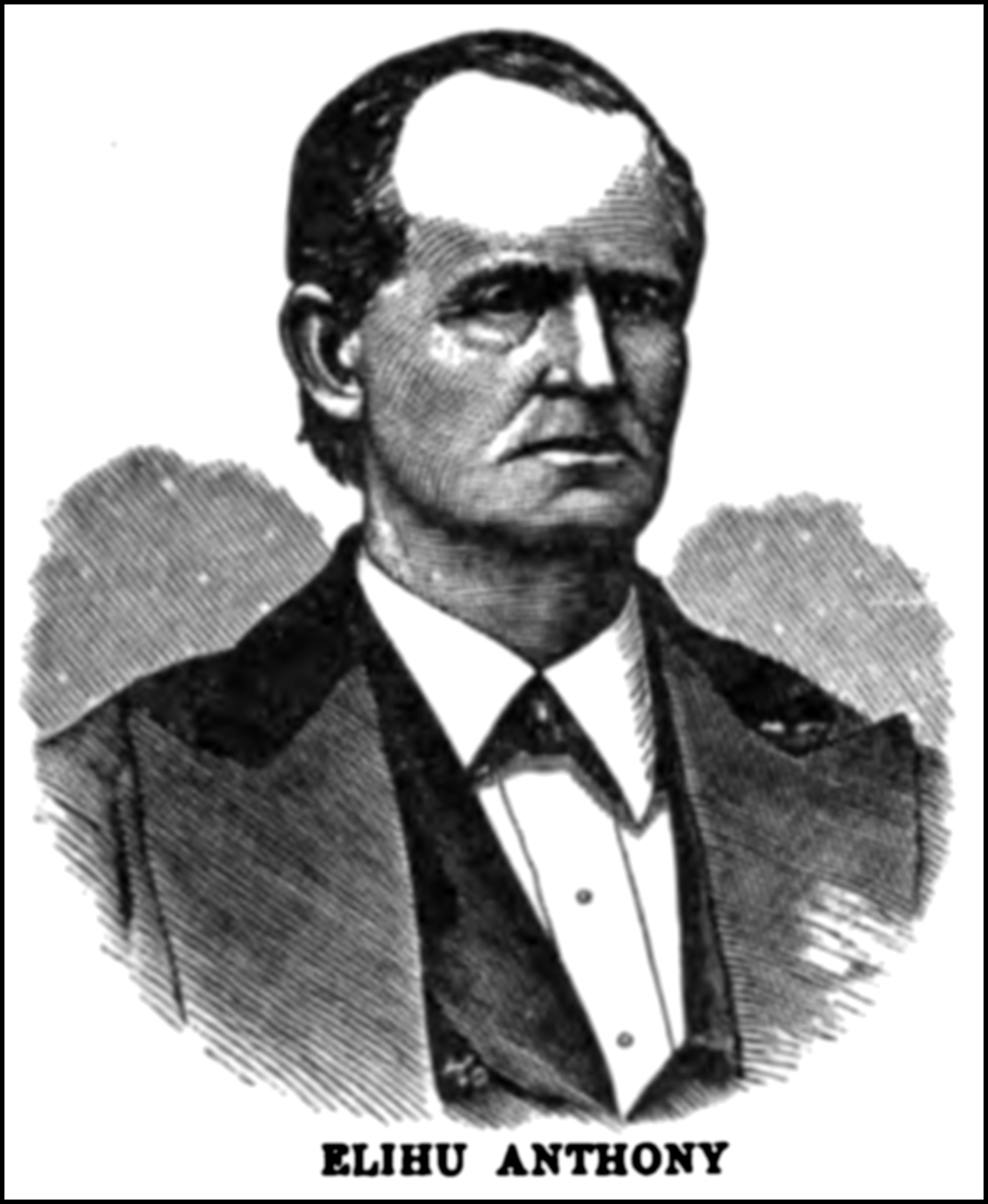
1851: As told by Elihu Anthony in 1885

Elihu Anthony
Elihu Anthony,
Santa Cruz County, California ...,
W. W. Elliott & Co., 1879
The first mail was brought to Santa Cruz on horseback over the mountains from Santa Clara in the winter of [18]'50. The mail consisted of one letter and two newspapers.... We hadn't enough mail to put in a bag until we began to receive a regular mail once a week in [18]'51. When the news was heard of a steamer arriving in San Francisco with the Eastern mail the whole white population waited anxiously for the mail, which brought them news from home and friends.


Loma Prieta by William Keith
Loma Prieta by William Keith, 1874
Lard & Davis had the first contract to carry the mail. This was in '51. Lard's boy, who carried the mail on a mule, once, while coming over the mountains, ran down a cub or young bear. He tried to make the cub come out, but couldn't make it do so. The mail bag was lashed to the saddle, you see, and when the young Lard whipped up the mule, the old bear, who was watching the proceedings, came after him. The boy heard the bear coming, and gave one glance around and then put the spurs to the mule. The bear gained on him and when near enough sprang on the mule's back, scraping the flesh off and taking the mail bag. I tell you when the boy reached town he was as pale as a ghost and frightened almost out of his wits. Well, to cut the story short, we sent a man back to find what mail the bear was kind enough to leave. The strangest thing of all, was that the man returned with the mail, but he reported that the bear had "chawed up" the leather bag and did not damage the mail.

Wednesday, January 11, 2017

California Indian Bear Hunting

In his book The Ohlone Way, author Malcolm Margolin tells the story of a bear hunt as described by a descendant of the Yokut people, neighbors of the Ohlone:

Yokut Indians, neighbors of the Ohlone,
hunting on the bay of San Francisco.
Drawn by Louis Choris in 1815
"… twelve men each with bow and arrows started for the bear’s cave.…[they] arranged a semi-circle of stakes, driving them into the ground in front of the cave. They took shooting positions behind these. Holoansi [the first runner] went to the cave entrance to lure the bear …"

In the book Sixty Years in California, William Heath Davis describes a bear hunt during the Mission era:

"The Indians of California used artfully constructed traps for bears. They dug a large hole, about five or six feet deep, directly under the branch of a tree, covered it with brush and a light coating of earth, and made it all smooth on top. From the branch would be suspended a quarter of beef. Bruin would scent the meat, and, approaching without suspicion, would fall headlong into the pit. Shooting with bow and arrows, the Indian, having come out of his place of concealment, would presently kill the bear."

Ohlone and Grizzlies

Prior to 1769, the Ohlone were the only peoples to inhabit the Santa Cruz area. Their total population once numbered 10,000 or more with a least 600 villages in and around Santa Cruz. Village populations ranged from 50 to 500. In the smaller seasonal villages, the villagers would take advantage of seasonal sources of food, such as game, fruits, and nuts.

Many foods were favorites of both the Ohlone and grizzlies. Acorns, one of a grizzly's favorite foods, was a staple food for the Ohlone. It likely resulted in confrontations during the acorn harvest season or a grizzly raid on a village acorn storage site. Other foods they both ate included seeds, berries, roots, deer, fish, and whale. 

In 1776, while in what is now San Mateo County, the second Anza Expedition encountered, and killed, a large grizzly. Father Font wrote in his diary:

"There are many of these beasts in that country, and they often attack and do damage to the Indians when they go to hunt, of which I saw many horrible examples."

In the book Three Years in California [1846-1849], Walter Colton describes the grizzly:

"Nature has thrown over him [the grizzly] a coat of mail, soft indeed, but impervious to the storm and arrow of the Indian."

Archaeologist Mark Hylkema:

"…grizzly bear remains [are found] in the archaeological sites, and it is interesting to recognize that these large semi-aggressive omnivores co-existed with native people for millennia. The skins were used by high status men and various membership societies used them as totems."

"…[grizzly remains are] not infrequently seen as ornament and display among human burials. They occur as canine teeth pendants with drilled apertures for stringing, and claw necklaces." 

In 1776, while on the San Francisco Peninsula, Father Font described bear skin clothing in his diary:

"Among the men I saw a few with a little cape like a doublet reaching to the waist and made of bear skin, and by this mark of distinction I learned that these were the owners or masters of the launches."


Grizzly Bear Claw
Collection of the Los Altos History Museum
This California grizzly bear claw was found in a Los Gatos cave by Albert Thirkell. It is not known what date it was found.

It was given to Los Altos Hills amateur historian Florence Fava around 1970. She wrote:

“This is but one of several which made up a necklace which crumbled when removed from the cave it was found in.”